
What if reducing collection frequency isn’t the first step to lower waste costs? For London shopfitters, volumes can change quickly during refurbishment, and poorly separated materials may be harder to recover. If collections arrive at the wrong time, they can also disrupt site access, active work or trading hours. Understanding what’s driving the spend is a better place to start when considering how to reduce commercial waste costs.
This guide explains how to review waste volumes, spot avoidable costs and improve separation and reuse on site. You’ll also learn how to plan collections around shopfitting schedules and London access constraints. Greenline Environmental’s 24-hour commercial service can help coordinate collection times around active works, so waste management fits the project rather than interrupting it.
Key Takeaways
- Track waste types, volumes, collection dates and project stages to pinpoint what is driving costs.
- Learn how to reduce commercial waste costs by sorting suitable materials, preventing contamination and keeping reusable items out of waste streams.
- Match collection arrangements to observed waste volumes and shopfitting milestones rather than guesswork.
- Plan collection windows around site access and work phases, using Greenline’s 24-hour service to support demanding schedules.
How London shopfitters can find the sources of commercial waste costs
Cost control starts with understanding what materials a project produces, how much accumulates and how often collections take place. Without that picture, changing collection frequency is guesswork. A shopfitting project may generate a short-lived surge of packaging, timber or fixtures, while a business’s day-to-day waste continues throughout the work.
Review a representative period and note when volumes rise or fall. Mixed materials can make sorting harder, while restricted access, limited loading space and short project windows can affect when waste can be moved. These practical pressures may lead to collections that don’t align with the work. Greenline’s 24-hour commercial service can help coordinate waste operations around demanding site schedules. For ongoing business waste, see the commercial trade waste service.
What should a shopfitter record during a waste-cost review?
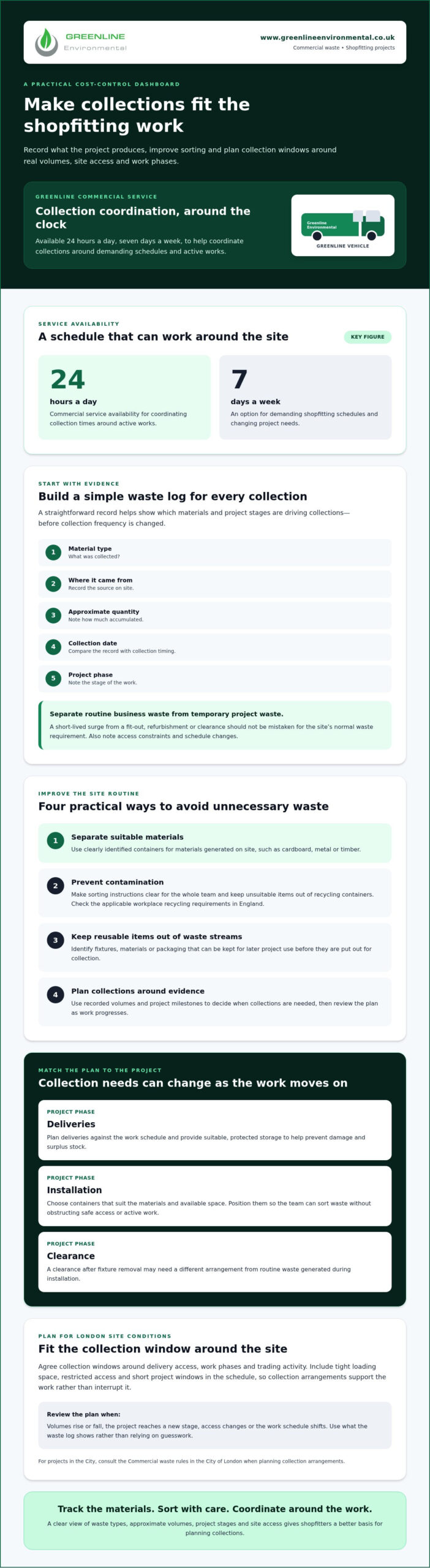
Keep a straightforward log for each collection. Record the material type, where it came from, its approximate quantity, the collection date and the project phase. Note whether the waste came from routine business activity or a temporary fit-out, refurbishment or clearance. This distinction helps prevent a project peak from being mistaken for the site’s normal waste requirement.
Include practical details such as access constraints or changes to the work schedule. Then compare the log with collection dates to see whether volumes consistently build up before a scheduled collection or spike at a particular stage. A simple record can reveal where prevention or reuse may be possible; the waste management hierarchy offers a useful framework for considering options before disposal.
A basic waste log helps reveal which materials and project stages drive collections. It gives shopfitters a clearer basis for deciding what to improve before changing collection arrangements.
How to reduce commercial waste costs through better sorting and collection planning
Once you understand what a project produces, improve the site routine before changing collection frequency. A clear process can keep recyclable and reusable materials separate, reduce contamination and help collections reflect actual work rather than assumptions.
- Separate suitable materials. Set up clearly identified containers for the materials generated on site, such as cardboard, metal or timber. Greenline’s commercial recycling service supports the recovery of suitable separated materials.
- Prevent contamination. Make sorting instructions easy for the whole team to follow, and keep unsuitable items out of recycling containers. In England, check the applicable workplace recycling requirements when setting up your process.
- Keep reusable items out of waste streams. Identify fixtures, materials or packaging that can be retained for later project use before they are put out for collection.
- Plan collections around evidence. Use recorded volumes and project milestones to decide when collections are needed. Revisit the plan as the job moves from deliveries and installation to clearance.
Which operational changes can prevent unnecessary waste collections?
Plan deliveries against the work schedule and provide suitable, protected storage for materials. This can help prevent damage, surplus stock and avoidable disposal. Choose containers that suit the materials and available site space, then place them where the team can sort waste without obstructing safe access or active work. Review the routine as project needs change.
Changing collection arrangements should support the work, not interrupt it. Greenline’s 24-hour commercial service can help coordinate collections around demanding shopfitting schedules. To discuss arrangements for a commercial project, request a project quote.
How London shopfitters can coordinate lower-waste collections around 24-hour work
A collection plan should fit the site, not force the site to fit the collection. For shopfitters, agree windows around delivery access, work phases and trading activity. A clearance after fixture removal may need a different arrangement from routine waste generated during installation. Planning these changes can help keep materials from accumulating in busy work areas and reduce avoidable disruption.
London sites can have tight loading space and restricted access, so include the practical details in your schedule. For projects in the City, consult the Commercial waste rules in the City of London when planning collection arrangements. Greenline’s commercial service operates 24 hours a day, seven days a week, giving shopfitters an option to coordinate collections around demanding schedules and active works.
When can a tailored commercial collection plan help a shopfitting project?
A tailored plan is useful when a project’s waste pattern changes, such as during a major strip-out, a delivery-heavy phase or a one-off clearance. Rather than treating every stage like routine waste, map the anticipated material types and approximate volumes against milestones, then plan access and collection windows accordingly. Greenline’s building and construction waste consultancy can support project-specific planning.
For a practical next step, gather the waste types, approximate volumes, site location and preferred timing. These details help shape a collection plan around the work and support a clearer assessment of how to reduce commercial waste costs. Request a tailored quote for your shopfitting project.
Put a smarter waste plan into action
For shopfitters, better cost control begins with a clear view of what each project produces. Track waste by material and project stage, separate suitable recyclables, and plan collections around actual volumes, site access and work phases. These practical steps show how to reduce commercial waste costs without making collection timing a guess.
Greenline’s commercial services are available 24 hours a day, seven days a week, helping coordinate collections around demanding schedules. Local disposal partners support recycling, reuse and energy recovery to divert waste from landfill. Share your waste types, approximate volumes, location and preferred timing to shape a plan around your project.
Request a tailored commercial waste quote and take the next step towards a more organised, lower-waste site.
Frequently Asked Questions
How can a business reduce commercial waste costs?
Start by identifying what materials you discard, how much accumulates and when collections happen. A simple log can distinguish routine business waste from temporary shopfitting or clearance waste. Then improve separation, prevent reusable materials from being thrown away and plan collections around observed volumes and project stages. This practical approach helps businesses understand how to reduce commercial waste costs before changing service arrangements.
Can recycling reduce commercial waste costs?
Recycling can help manage waste costs by keeping suitable materials separate from general waste and supporting their recovery. For shopfitters, this could mean sorting materials such as cardboard, metal or timber where appropriate, while preventing contamination. Keep reusable items aside for future use rather than putting them in waste containers. Greenline’s local disposal partners support recycling, reuse and energy recovery to divert waste from landfill.
How often should a business arrange waste collection?
Set collection frequency according to how quickly waste accumulates, the materials produced and the space available to store it safely. Use collection records to identify quieter periods and peaks, then review the schedule when project phases change. A shopfitting site in EC1 or SE1 may have different volumes during installation and clearance, so observed patterns are more useful than a fixed assumption.
How can shopfitters manage waste collections outside normal working hours?
Plan a collection window around site access, work phases and trading activity, and share those details when arranging the service. Greenline’s commercial services operate 24 hours a day, seven days a week, helping shopfitters coordinate waste work around demanding schedules. For sites in central London, account for loading arrangements and local access conditions so collections fit the project safely and smoothly.