
A single waste contact can simplify a shopfitting project, but only if each waste stream stays visible and is routed appropriately. The benefits of consolidated waste management aren’t about mixing materials together. They’re about coordinating collections and services so changing volumes of wood, plasterboard, metal and packaging don’t create extra work for your team.
For shopfitters, juggling separate providers can take time and poorly timed collections can interrupt work in busy London locations. Greenline Environmental’s commercial services are available 24 hours a day, seven days a week, helping projects plan waste removal around operational schedules, including out-of-hours needs. This article explains which tasks can be coordinated, how to keep different materials organised, and how services such as wait and load, construction waste removal and bin hire can support projects as they progress.
Key Takeaways
- The benefits of consolidated waste management come from coordinating collections while keeping each material stream identifiable and appropriately routed.
- Shopfitters can reduce collection disruption by identifying materials, anticipating changing site needs and planning access around project schedules.
- Construction waste removal, site clearances, wait and load and bin hire can support different stages of a fit-out.
- Greenline’s 24-hour service gives London businesses more flexibility to plan waste collections around operating hours and site access.
What are the benefits of consolidated waste management for businesses?
For shopfitters, waste needs can change as a project moves from strip-out to installation and final clearance. Coordinated management can make collections easier to organise, without adding another task to an already busy site team.
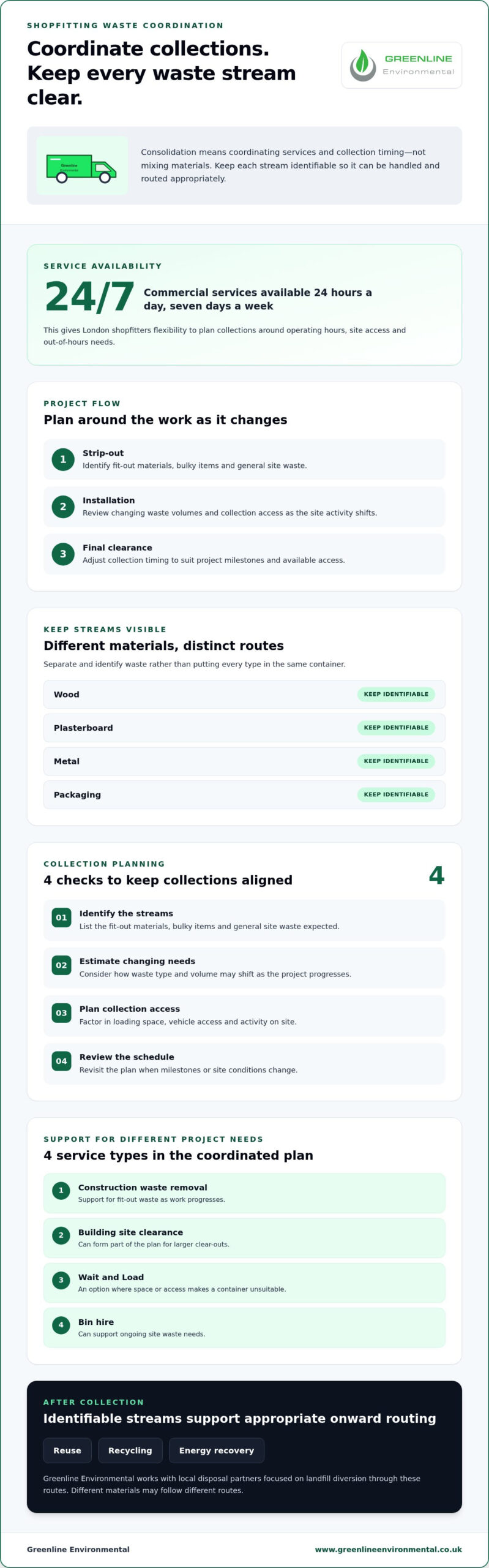
Consolidated waste management means coordinating relevant waste services and collections while keeping each material stream identifiable for appropriate handling and onward routing. It brings planning together; it doesn’t mean putting every type of waste in the same container. This distinction matters in the wider context of waste management in the United Kingdom, where different materials can require different routes.
With fewer handovers between separate arrangements, teams may spend less time booking collections, relaying site details and resolving scheduling clashes. Clearer oversight can also help staff see what needs collecting and when, making it easier to plan around access restrictions and project milestones. These are practical benefits of consolidated waste management, rather than a promise of automatic savings or a particular environmental result.
Does consolidation mean putting every type of waste together?
No. Consolidation is about coordinating service management, not indiscriminate mixing. Fit-out materials, bulky items and general site waste should remain identifiable so they can be handled and routed appropriately. Clear separation also gives the project team a more useful view of what is building up, helping them organise collections as work progresses. Coordination supports control; it doesn’t remove the need to manage distinct waste streams separately.
For London businesses, a coordinated approach can bring commercial collections into a clearer plan. Greenline’s trade waste services can sit alongside relevant site services, with commercial availability 24 hours a day, seven days a week. That flexibility can help shopfitters plan around operating hours and site access, while keeping waste streams distinct.
How can shopfitters coordinate waste streams without disrupting a project?
A shopfitting site can move quickly from strip-out to installation and final clearance. A simple sequence helps keep waste planning aligned with each phase, rather than allowing collections to compete with work for space and access.
- Identify the streams: note the fit-out materials, bulky items and general site waste expected, keeping each identifiable.
- Estimate changing needs: consider how the volume and type of waste may shift as the project progresses.
- Plan collection access: factor in loading space, vehicle access and site activity when arranging collections.
- Review the schedule: revisit the plan as milestones or site conditions change, and adjust collection timing accordingly.
This practical approach can support the benefits of consolidated waste management without assuming that every material follows the same route. The Waste Prevention Programme for England provides wider policy context for preventing waste and managing resources. On site, clear separation and a current collection plan help teams keep track of what needs removing.
How should a shopfitter plan collections around site activity?
Match collection timing to the work phase, expected waste volume and available access, then review the plan as project activity changes. Busy Central London sites may need careful coordination of vehicle movements and collection windows to limit disruption. Greenline’s commercial service operates 24 hours a day, seven days a week, giving shopfitters flexibility when planning around operating hours and site access.
For larger clear-outs, building site clearance can form part of the plan; building and construction waste consultancy can also help shape project arrangements. To discuss a collection plan for a shopfitting project, request a quote.
How does Greenline make consolidated waste management workable in London?
Shopfitting projects can need different support at different stages. Greenline Environmental’s construction waste removal and building site clearance can help with fit-out waste and larger clear-outs, whilst bin hire can support ongoing site needs. Where space or access makes a container unsuitable, Wait and Load offers another way to coordinate removal. Keeping these services under one plan helps shopfitters adapt as the job changes.
Busy London sites also need collection plans that take account of operating hours and access. Greenline Environmental’s commercial services are available 24 hours a day, seven days a week, giving businesses flexibility to plan collections outside their busiest periods or around site access arrangements. These practical details are central to the benefits of consolidated waste management: coordinated support can fit the project, rather than forcing work to fit a rigid collection routine. Businesses can also explore building and construction bin hire as part of planning site waste needs.
What happens after waste is collected?
Collection is one part of the process. Greenline Environmental works with local disposal partners focused on landfill diversion through reuse, recycling and energy recovery. Keeping waste streams identifiable supports appropriate onward routing, without treating every material as if it follows the same route. The focus is on responsible handling, not an unsupported promise of a particular recovery rate or environmental result.
For a tailored plan that reflects your business, project stages and site access, request a quote.
Build a waste plan around your project
For shopfitters, the benefits of consolidated waste management come from coordinating collections as project needs change, while keeping each waste stream identifiable. A clear plan can reduce the time spent arranging separate collections and help teams organise access around site activity.
Greenline’s commercial services are available 24 hours a day, seven days a week. Construction waste removal, site clearances, Wait and Load and bin hire can support different stages of a project and its collection needs. Local disposal partners focus on landfill diversion through reuse, recycling and energy recovery, supporting responsible onward handling.
Ready to plan waste management around your operations? Request a quote for your business waste requirements and take a practical step towards a more organised project.
Frequently Asked Questions
What does consolidated waste management include?
Consolidated waste management coordinates the services, collection timings and site arrangements a business needs, while keeping separate waste streams identifiable. For a shopfitter, this might bring construction waste removal, site clearance, Wait and Load or bin hire into a joined-up plan. The benefits of consolidated waste management can include fewer handovers and clearer oversight, without treating all materials as one stream.
Can consolidated waste management work for shopfitters?
Yes. Shopfitters can use a coordinated plan to adapt collection arrangements as waste volumes and site requirements change during a fit-out. Greenline’s commercial services are available 24 hours a day, seven days a week, supporting scheduling around operating hours and site access. This can be useful for projects in busy Central London locations such as EC1, WC2 and SE1.
Does consolidating waste services mean all waste is mixed together?
No. Consolidation means organising services and collections together, not mixing different materials indiscriminately. Keep each stream identifiable so it can be handled and routed appropriately after collection. This also helps site teams see what is accumulating and plan removal without losing track of the distinct waste types generated during a shopfitting project. The collection plan can be coordinated even when waste arrangements remain separate.
How can a business tell whether consolidated waste management is worthwhile?
Review how much staff time goes into arranging separate collections, managing handovers and resolving clashes with site activity. Then consider whether a coordinated schedule would give clearer oversight and suit changing volumes or access windows. If these issues recur, consolidation may be worthwhile operationally. Compare the practical workload and collection fit rather than assuming it will automatically reduce costs.