
Could a waste-removal quote leave your shopfitting team facing extra labour or waiting-time charges on collection day? A price is only useful when it reflects the waste, access and collection arrangements your project actually needs. That’s why avoiding hidden charges for waste removal starts with clear information upfront.
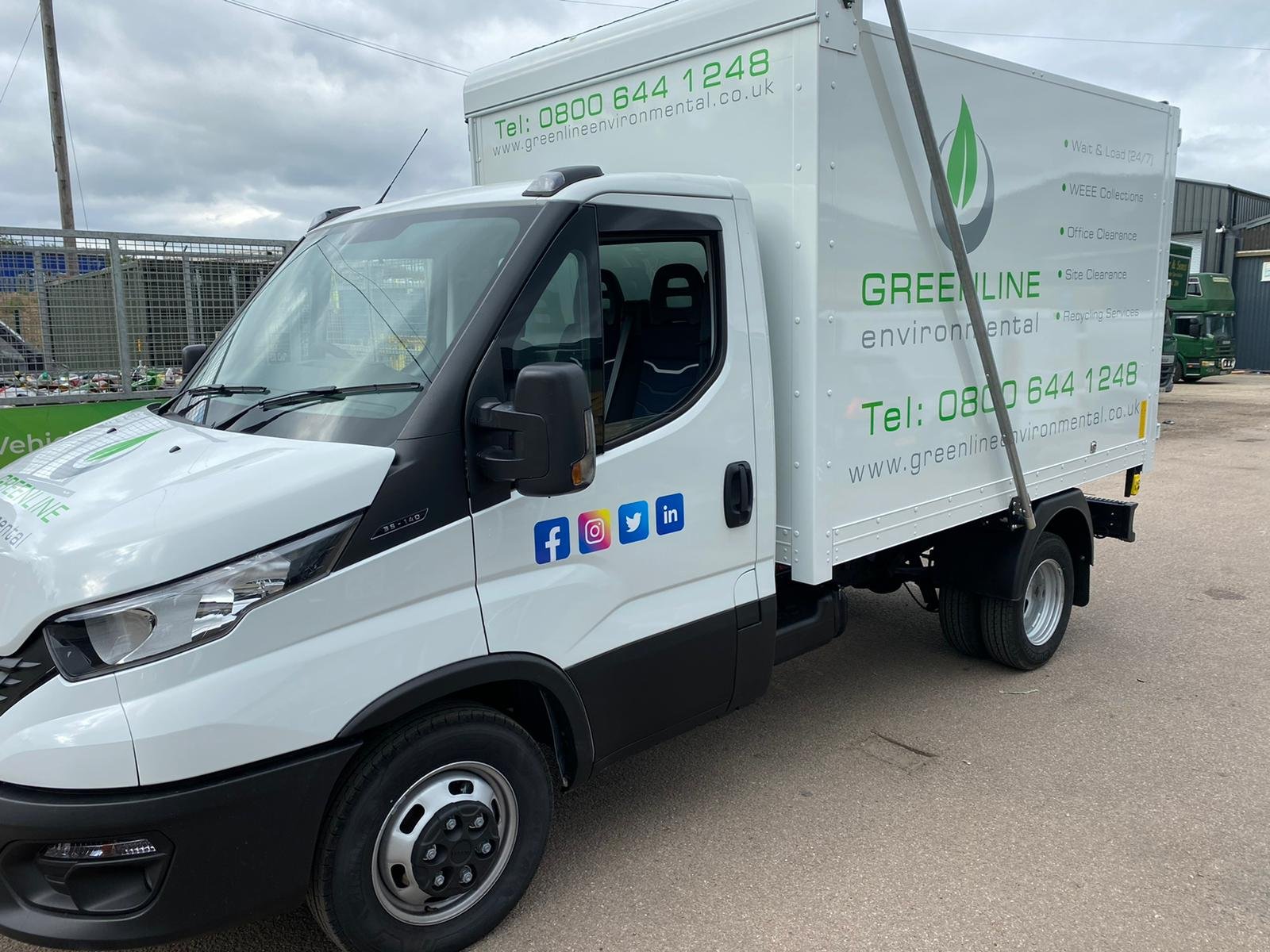
For shopfitters working to tight schedules, restricted access or a change in waste volume can affect how a collection runs. Greenline Environmental provides commercial waste services 24 hours a day, seven days a week, helping align collections with project timings. This guide explains which details to share when requesting a quote, including waste types, estimated volume, carrying distances and site access. You’ll also learn how to compare quotations on a like-for-like basis and plan a dependable collection, so waste removal supports the schedule rather than disrupting it.
Key Takeaways
- Waste type, estimated volume, labour, transport and disposal all shape a shopfitting clearance plan and its quote.
- Share materials, volume, site access, timing and collection method upfront, then check what the quote assumes about labour, vehicle time, disposal and sorting.
- Avoiding hidden charges for waste removal starts with comparing quotations on the same scope and service assumptions.
- Greenline Environmental tailors collections to business logistics, with local disposal partners focused on recycling, reuse and energy recovery. Explore construction waste services for relevant material streams.
Why can waste removal quotes change on a London shopfitting project?
A waste removal quote depends on the job described, not simply the words “waste removal”. A shopfitting clearance might involve removed fittings, packaging or mixed site waste, and each material stream can affect how the collection is planned. The estimated volume, loading effort, transport and disposal route all matter too. Waste management encompasses the processes and actions required to manage waste from its inception to its final disposal.
Site logistics are part of the scope. A collection point close to the vehicle is different from waste that must be carried through a building, and restricted access or specific loading arrangements can affect how the work is delivered. If the materials or collection location change from what was described, the original plan may no longer reflect the job. That doesn’t mean an extra charge is automatic; it means clear assumptions help everyone understand what the quote covers.
Which job details matter when pricing a shopfitting clearance?
Describe the materials as accurately as you can. For example, note whether the clearance includes dismantled fittings, boxed packaging or mixed waste, rather than grouping everything under “rubbish”. Give the collection location and explain access, including any carrying distance or loading constraints that could affect the team’s work.
Share an honest volume estimate, too. If the quantity is uncertain because the fit-out is still under way, label it as an estimate and explain what could change. This gives the collection plan a realistic basis without presenting an unmeasured load as exact.
For shopfitters, aligning collection arrangements with the project schedule can help keep site operations orderly. Greenline can tailor a commercial collection plan to the waste and site details provided. Where routine commercial waste streams sit alongside a project clearance, trade waste services may also be relevant.
How can you check a waste removal quote before booking?
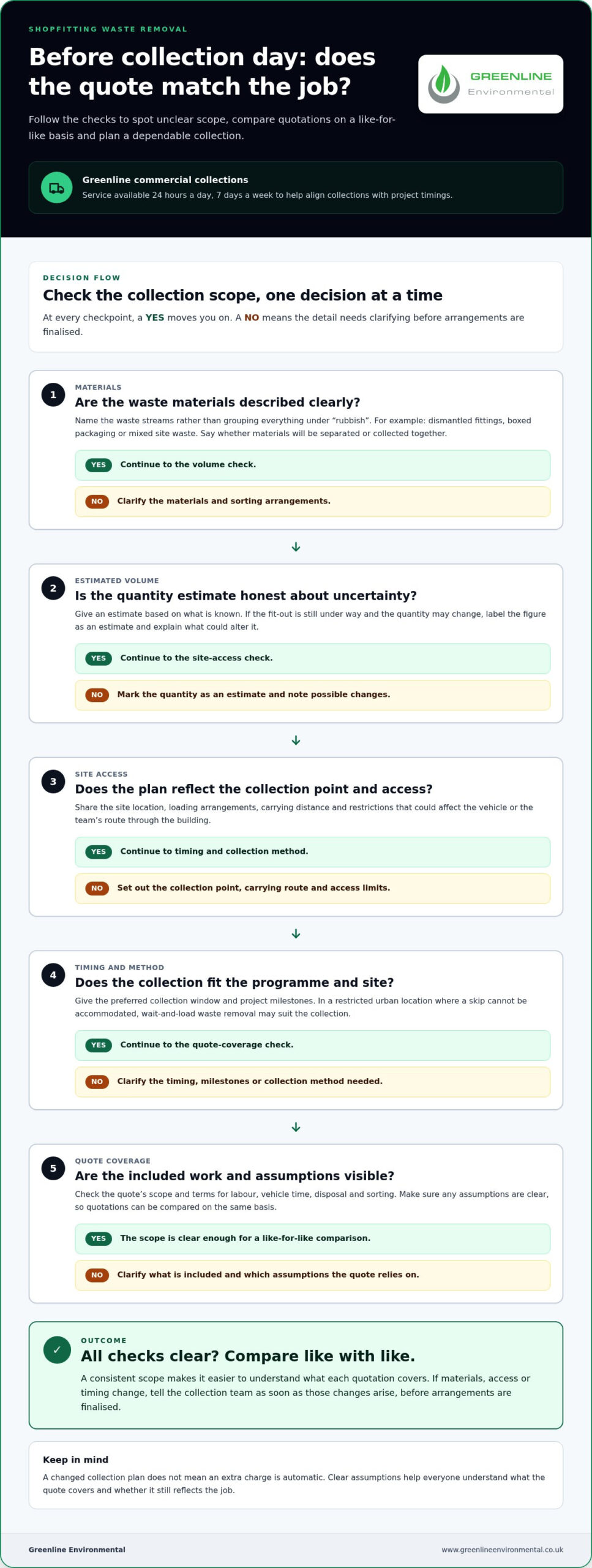
Compare what each quotation includes, not just the headline figure. Use this checklist to make sure the proposed collection reflects your shopfitting job:
- Describe the materials. Name the waste streams and note whether they’ll be separated or collected together.
- Estimate the volume. If the fit-out is ongoing and quantities may change, label your figure as an estimate.
- State site access. Include the collection point, loading arrangements and any restrictions that could affect the vehicle or carrying route.
- Give the timing. Share the preferred collection window and any project milestones the clearance must work around.
- Identify the collection method. For restricted urban locations, wait and load waste removal may suit a collection where a skip cannot be accommodated.
What should a clear commercial waste quote set out?
Check that the quote states the work included and the scope it is based on. Look for clear terms around labour, vehicle time, disposal and sorting. If any of these are assumptions, make sure they’re visible, so you can compare like with like rather than relying on a low figure with a different scope.
Tell the collection team about changes to materials, access or timing as soon as they arise, before arrangements are finalised. For construction-related shopfitting work, the construction site clearance guide offers further planning context. The UK government’s waste hierarchy prioritises preventing waste first, so clarify how sorting is handled where it affects the collection plan. A consistent scope is a practical step towards avoiding hidden charges for waste removal. For a tailored collection plan, request a quote with your site and waste details.
How Greenline helps shopfitters plan clear, reliable waste removal
Shopfitting work often runs to a tight programme, so collection planning needs to account for site access and the sequence of work. Greenline tailors commercial waste plans to business logistics, helping coordinate the clearance with the conditions and requirements on site. Clear planning gives shopfitters a practical framework for managing waste alongside the project.
Where a fit-out produces construction materials, Greenline’s construction waste services can support the clearance. Local disposal partners focus on recycling, reuse and energy recovery, helping direct materials towards responsible management wherever appropriate.
What to include when requesting a shopfitting waste quote
Give the collection team a practical picture of the site and project. Include the location, current project stage and the materials expected, along with an honest volume estimate. If the quantity may change as work progresses, say so. Explain access constraints and the collection point, then state your preferred timing and any schedule requirements the team should plan around.
- Site location: the shop or commercial premises address.
- Project stage: whether work is under way or nearing completion.
- Waste description and volume: the expected materials and approximate quantity.
- Access details: loading arrangements and any restrictions at the site.
- Preferred timing: the collection window that best fits the programme.
These details give Greenline a sound basis for planning a tailored collection around your project logistics. Share them through a request for a tailored quote to help shape a collection plan that fits the work ahead.
Set your next shopfitting clearance up for a smoother run
Make waste collection part of the project plan, rather than a task left until the final stages. Early coordination gives your team a clearer basis for scheduling site work and managing the handover, especially when shop access and fit-out activity need to work around one another. A defined collection plan also supports avoiding hidden charges for waste removal by keeping expectations aligned as the job progresses.
Before your next clearance, bring the collection into the same planning conversation as other essential site logistics. Greenline can shape a commercial waste plan around your business requirements, helping shopfitters approach the work with greater order and confidence. Take the next step and start planning your shopfitting waste collection. A well-organised clearance can help your team keep its attention on delivering the project.
Frequently Asked Questions
What can cause a waste removal quote to change?
A quote may need to be reviewed if the work differs from the scope it was based on. For example, a shopfitting team might uncover additional material during strip-out or need to alter the planned collection arrangement. Tell Greenline about changes as soon as you know about them, so the collection plan can be considered against the updated job rather than relying on outdated details.
What information should I provide for a commercial waste removal quote?
Alongside the job details, explain what you expect the collection team to handle and whether your staff will prepare or load the waste. If different materials will be kept apart, describe how they’ll be presented. A site contact who can clarify practical arrangements also helps keep planning aligned. These extra details support avoiding hidden charges for waste removal by making the intended service clearer.
Can wait and load help avoid skip-related charges in Central London?
Wait and load can avoid the need for a skip permit in restricted urban locations, including parts of Central London. Waste is loaded directly into the collection vehicle, making this option useful where placing a skip is impractical. It doesn’t mean every collection-related charge disappears, so compare the quoted service scope and loading arrangements rather than assuming all costs are avoided.
Does Greenline provide waste removal outside standard working hours?
Yes. An out-of-hours collection can help shopfitters coordinate waste removal with overnight work, a trading schedule or a project handover. For a site in EC1, WC1 or SE1, share the access window and any timing constraints when planning the collection. This helps align the arrangement with the work taking place and the practical conditions at the premises.