

A recycling system works when the right choice is also the easiest one. Staff may be willing to recycle, but unclear labels, inconvenient bin locations and disrupted collections can send useful materials into general waste or contaminate recycling.
If you’re asking how to improve office recycling rates, start with a practical system built around how your workplace operates. Check where recyclable materials are being lost, make sorting clear and organise collections to suit the way your office works.
For London firms, shopfitting and fit-out work can quickly change waste streams, access routes and collection needs. Greenline Environmental provides commercial waste services 24 hours a day, seven days a week, helping businesses maintain continuity as their workplaces change. The steps below cover staff communication, bin placement and collection planning, including for businesses in EC1, EC2, EC3, EC4, WC1, WC2, E1, SE1, SW1, SW8, SW7 and SW3.
Key Takeaways
- To learn how to improve office recycling rates, check which materials are being misplaced and where disposal points cause confusion.
- Match bins to the waste your workplace produces, then use consistent labels and clear visual cues.
- Build simple sorting routines around shared areas such as kitchens and printer points, where waste is often generated.
- During shopfitting, agree responsibilities and collection arrangements around changing waste volumes to keep recyclable materials separate.
How to improve office recycling rates starts with finding what goes wrong
Good intentions don’t prevent sorting mistakes when staff can’t tell which bin to use, labels are unclear or recycling points are awkwardly placed. Before changing the system, find out what’s happening. A short review can show whether recyclable materials are entering general waste, bins are overflowing or the collection setup no longer suits the way the office works.
This is a practical first step in how to improve office recycling rates: use evidence from your own workplace to decide what to change, rather than making several changes at once.
What should an office recycling audit look for?
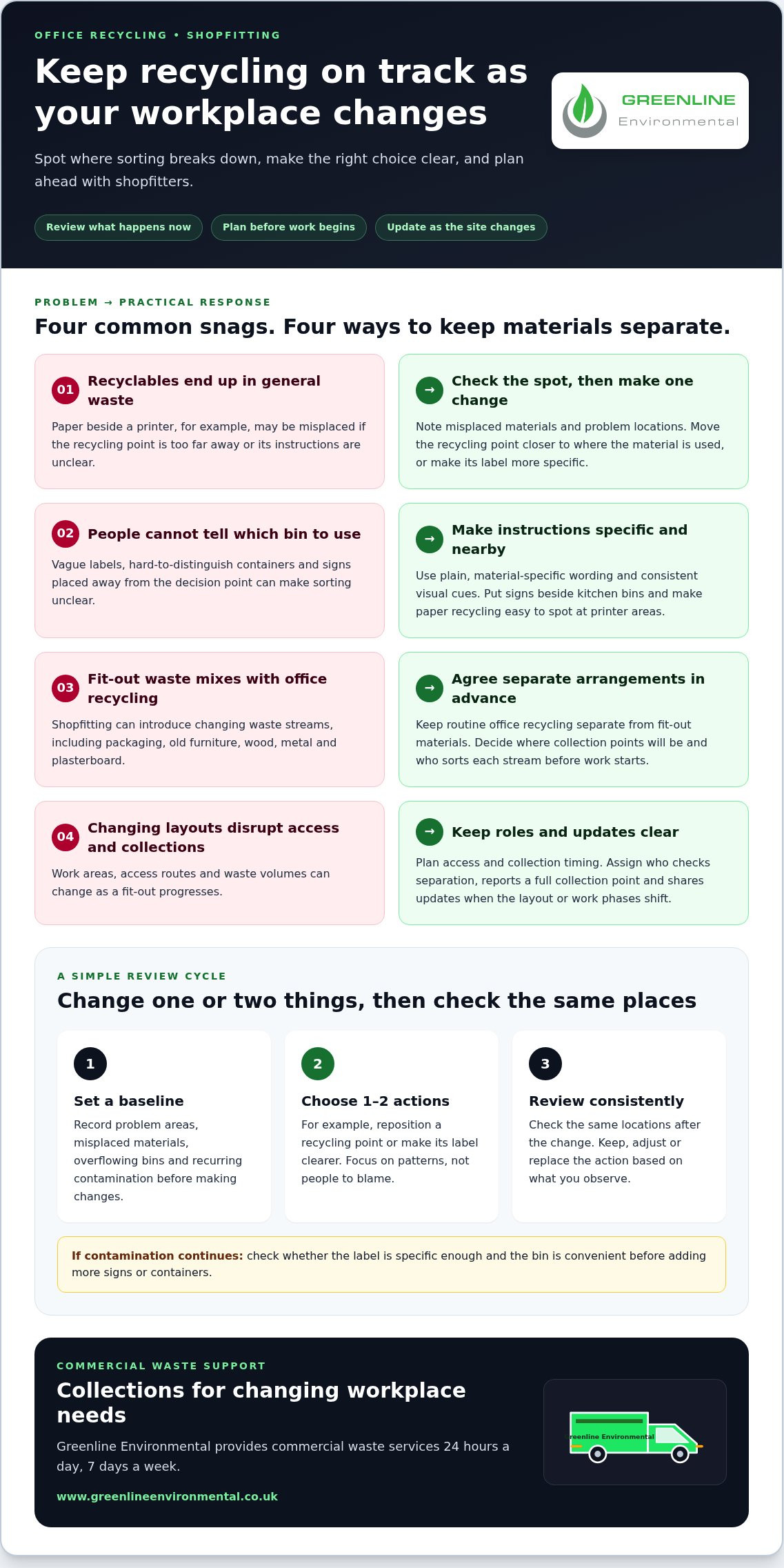
An office waste audit is a practical review of the waste a workplace produces and the sorting habits that determine where materials end up. Check bin locations, labels, overflow and recurring contamination. Look for patterns, not people to blame. For example, if paper repeatedly appears in general waste beside a printer, the recycling point may be too far away or its instructions may be unclear.
Note which materials appear most often in general waste, where sorting breaks down and whether recycling bins are easy to reach. A general overview of recycling bins can help clarify common bin types as you review your setup. If shopfitting changes the layout or creates new waste streams, include those areas in the review.
- Set a baseline: note problem areas, misplaced materials and any overflow before making changes.
- Choose one or two actions: for example, move a recycling point closer to where a material is used, or make its label more specific.
- Review consistently: check the same locations and indicators after the change, then keep, adjust or replace the action based on what you observe.
Comparing the same locations before and after a change helps show whether it has worked. If contamination persists, check whether the label is specific enough and whether the bin is in a convenient place before adding more signage or containers.
Make office recycling easier with clear bins, labels and staff routines
A well-designed system makes the correct choice straightforward, even during a busy working day. Match each bin to a waste stream, place it near where that material is used, label it in plain language and explain the routine to staff. In shared areas, make recycling and general waste containers easy to distinguish and use.
How can signage and bin placement reduce sorting mistakes?
Put short, material-specific instructions where people decide what to do with an item. In a kitchen, place signs directly above or beside the relevant bins. At printer areas, make paper recycling easy to spot. Use consistent wording and visual cues throughout the office, and keep general waste clearly distinct from recycling. Greenline’s commercial recycling service supports collections organised around workplace needs.
Before work begins, plan with shopfitters how temporary work areas will be marked and how staff can continue to follow sorting instructions as the site changes. Review signs as areas reopen or move so they remain useful. For a collection arrangement suited to your workplace, request a tailored quote.
Keep London office recycling on track during shopfitting and changing operations
Office fit-outs can change both the volume and type of waste on site. Clearing a room may produce packaging and old furniture, while construction work can bring materials such as wood, metal and plasterboard into the mix. If these streams share the same disposal point, routine office recycling can quickly become difficult to manage.
How should shopfitters maintain recycling during an office fit-out?
Agree the waste arrangements with shopfitters before work begins. Decide where collection points will be, who is responsible for sorting each stream and how staff and shopfitters will access them as work areas change. Keep routine office recycling separate from fit-out materials, and update the plan when the layout or work phases shift. Businesses managing building waste can also use Greenline’s Construction Site Clearance service.
Plan collections and assign clear responsibilities. Decide who checks that waste streams remain separate, who reports a full collection point and how updates are shared with office teams and shopfitters. In busy London buildings, access and timing can affect where waste is held, so include these practical details in the site plan before work starts.
For ongoing commercial recycling, Greenline’s recycling service supports an organised approach to collections. Greenline works with local disposal partners focused on diverting waste from landfill through recycling, reuse and energy recovery. This helps businesses keep waste arrangements organised as site routines change. To discuss an arrangement for your office or fit-out, request a tailored quote.
Make recycling a lasting part of workplace planning
To improve office recycling rates across a changing London workplace, align internal responsibilities with a commercial collection plan that can adapt as needs evolve. Greenline Environmental provides commercial waste arrangements tailored to business requirements. Request a quote for commercial waste support and take the next step towards a more dependable setup.
Frequently Asked Questions
How can an office measure its recycling rate?
Compare the amount of waste sent for recycling with the total waste produced over the same period. If collection records provide weights, use those; otherwise, track container volumes consistently. Divide the recycled amount by the total and multiply by 100. Record contamination separately so a high recycling figure doesn’t conceal material that was sorted incorrectly.
Can food waste go in the same bin as office recycling?
No. Keep food scraps in a separate, dedicated food waste container rather than putting them with dry recyclables such as paper, cardboard, plastic or metal. This helps prevent food residue contaminating other materials. For example, place a clearly marked food caddy near a kitchen preparation area and arrange a separate collection for it.
What should an office do with confidential paperwork?
Keep sensitive paperwork separate from ordinary paper recycling and arrange secure destruction. A locked collection container in a controlled office area can reduce the chance of documents being left in shared bins or handled casually. Greenline Environmental provides confidential waste shredding for businesses that need a managed route for sensitive documents.
How can shopfitters keep recycling organised during an office fit-out?
Before work starts, agree a site plan that identifies waste streams, temporary holding points, responsible people and collection access. Brief shopfitters and facilities teams whenever work moves into a new phase, and update the plan if rooms or routes change. This is especially useful across busy London locations such as EC1, SE1 and SW1.