
The biggest benefit is keeping valuable materials in use for longer: reuse and recycling conserve natural resources and reduce the waste sent for disposal. Correctly separating recyclables could save businesses over 70% on waste-disposal costs, making the benefits of a sustainable waste policy both environmental and practical.
It’s easy to think of waste management as collection and disposal, but decisions made before waste leaves a site determine what can be reused, recycled or recovered. Start by preventing avoidable waste, then direct what remains into suitable streams instead of treating every discarded item alike. This article explains the benefits of a sustainable waste policy for UK businesses, from better resource use and cost control to more responsible operations.
Key Takeaways
- Build a practical waste policy around prevention and resource recovery, with clear responsibilities and targets.
- Review the materials your business discards to spot opportunities for reuse and better recycling.
- Apply the waste hierarchy in order: reduce what you use, reuse suitable materials, then recycle what remains.
- For shopfitting projects that generate construction waste, consider how dedicated removal can support an organised site.
1. What Is the Biggest Benefit of Sustainable Waste Management?
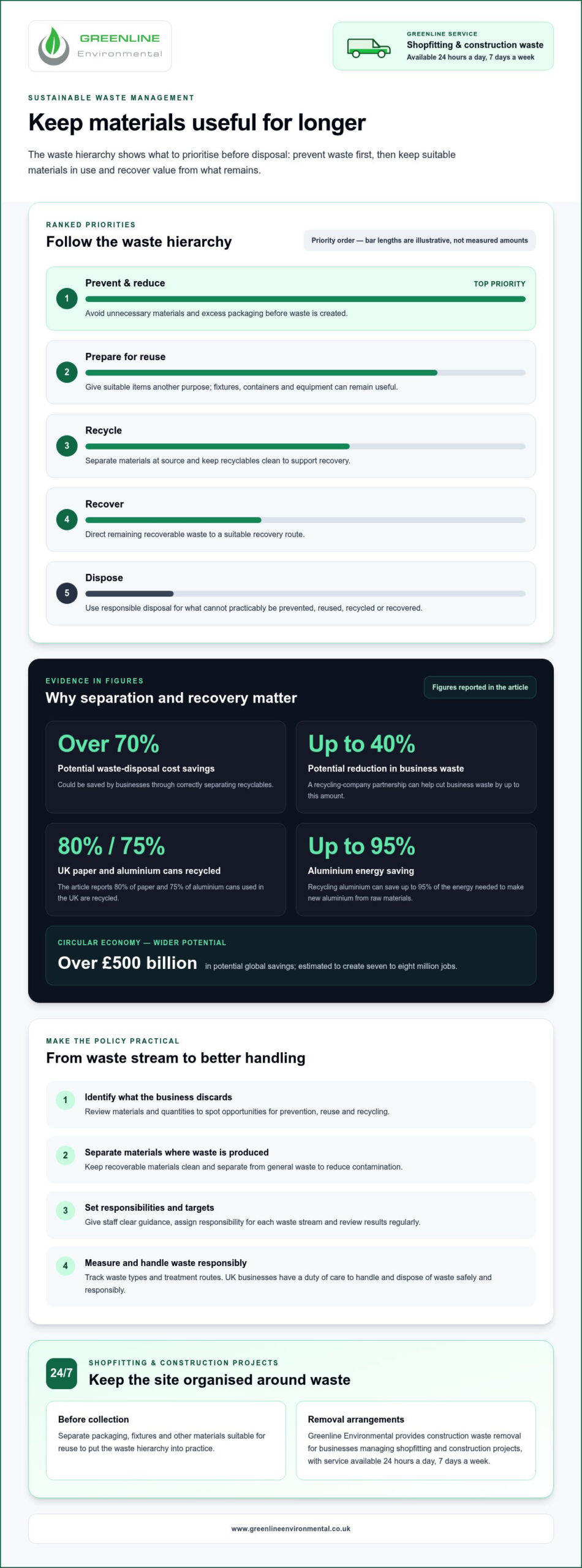
The biggest benefit is keeping materials useful for longer, instead of treating them as waste after one use. This is the principle behind a circular economy: businesses reduce material use, reuse products and recover resources through recycling. Effective waste management supports that cycle by separating materials for suitable reuse or recovery before disposal. Circular-economy principles could potentially save over £500 billion globally, while the circular economy is estimated to create seven to eight million jobs.
Zero-waste initiatives apply similar thinking by aiming to eliminate landfill waste through improved recycling and composting. For a business, implementing this approach starts with identifying its waste streams, then deciding which materials can be avoided, reused or recycled. Recoverable waste can have value when it is kept clean and separated, rather than mixed with general waste. Correctly segregating recyclables could save businesses over 70% on waste-disposal costs, according to market estimates.
Putting a policy into practice takes planning. Staff need clear guidance, because poor separation can contaminate recyclables or make reuse harder. Assign responsibilities and review results regularly to see whether your actions are reducing waste. UK businesses also have a duty of care to handle and dispose of waste safely and responsibly. Non-compliance can lead to fines, reputational damage and environmental harm.
Economic benefits go beyond disposal savings. Reusing materials reduces demand for natural resources, while recycling and recovery support work in collection, sorting and processing. Technology can help manage specific waste streams, but it is most effective when businesses first reduce waste and separate materials correctly. A sustainable policy connects everyday decisions to clear priorities: prevent avoidable waste, retain material value and dispose responsibly of what remains.
2. Resource conservation through recycling and reuse
Preventing waste, reusing items and recycling materials conserve natural resources by reducing demand for newly extracted materials. Reusing a container, fixture or piece of equipment extends its working life; recycling recovers materials for manufacturing. Both approaches reduce disposal and the amount sent to landfill.
Paper and aluminium show how recycling can preserve resources at scale. In the UK, 80% of paper and 75% of aluminium cans used are recycled. Recycling paper and paperboard can reduce deforestation and lower energy and water consumption. Recycling aluminium can also save up to 95% of the energy needed to produce new aluminium from raw materials.
London’s plans aim for the city to become zero-waste by 2026 and recycle 65% of municipal waste by 2030. These targets make practical action important: separate recyclable materials where waste is produced, keep them free from contamination, and reuse suitable items before disposal. Households can sort packaging and compost suitable food and garden waste; businesses can review purchasing, reduce excess packaging and give reusable materials another purpose.
3. Sustainable waste management and the reduce, reuse and recycle approach
The waste hierarchy prioritises prevention, followed by preparing items for reuse, recycling, recovery and disposal. UK waste legislation, including the Environmental Protection Act and the Waste Framework Directive, supports prioritising prevention, reuse and recycling over disposal. Apply the hierarchy by reviewing materials before collection and selecting the highest practical option for each waste stream.
Following the hierarchy also helps protect the environment and public health. Improperly discarded waste can pollute air, water and soil, while poor handling may expose people and the environment to harmful substances. Separating materials at source keeps recyclables cleaner and reduces avoidable disposal. Suitable organic waste can also be composted to support soil health.
Measurement makes progress clearer. Businesses can record the types and quantities they generate, then track collection and treatment routes. Waste-management software can organise these records; carbon tracking can help compare the environmental impact of different disposal methods. Organisations measuring Scope 3 emissions may include waste management within their wider emissions accounting, capturing impacts beyond their direct operations.
An environmental management system sets out plans, processes and practices for improving environmental performance. Make it practical by assigning responsibility for each waste stream, establishing a baseline and reviewing results against defined goals. For example, whether managing commercial fit-outs or home renovations led by firms such as Vancouver General Contractors, tracking materials recovered during a refurbishment alongside waste sent for disposal keeps valuable resources in circulation. This turns sustainable waste management into a structured process, not a one-off recycling effort.
For support with waste arrangements that contribute to your environmental goals, request a quote for your requirements.
Greenline Environmental: Construction Waste Removal
Greenline Environmental provides Construction Waste Removal for businesses managing waste from shopfitting and construction projects. When packaging, fixtures or other project waste is disrupting a work area, an organised removal plan helps keep the site clear and waste handling orderly. Separate materials suitable for reuse before collection to put the waste hierarchy into practice.
Greenline Environmental’s services are available 24 hours a day, 7 days a week, and are tailored to the logistical needs of businesses. This can suit shopfitters coordinating waste around busy sites and project schedules. For other commercial requirements, its offerings also include Event Waste Management, Bin Hire and Confidential Waste Shredding.
For Construction Waste Removal on your project, contact Greenline Environmental.
Put your next waste-management step into action
The benefits of a sustainable waste policy increase when environmental responsibility is built into everyday project planning. For shopfitters, consider material handling alongside site access, work schedules and organisation, rather than leaving waste decisions until the final stage. A clear process helps teams make considered choices throughout a project.
Greenline Environmental offers Wait and Load, Office Clearance and Construction Waste Removal for commercial waste needs. Choose the service that matches the task, then include it in a practical plan for your site or premises.
Discuss your requirements with Greenline Environmental and take a clear next step towards more responsible waste management.
Frequently Asked Questions
What Is the Biggest Benefit of Sustainable Waste Management?
A key benefit is more deliberate resource use, helping businesses get greater value from materials before discarding them. For example, check whether sound office furniture can be reassigned instead of replaced. This can reduce purchasing needs and make waste prevention part of routine operations, rather than a task left until the end.
What are the environmental benefits of a sustainable waste policy?
A sustainable policy can ease pressure on natural resources and reduce the environmental harm caused by poorly managed waste. Planning purchases around reusable transit packaging, for instance, can reduce reliance on single-use materials. The benefits of a sustainable waste policy also depend on clear handling procedures: staff need to know which materials to separate and where each stream goes after collection.
How can sustainable waste policies reduce greenhouse gas emissions?
Preventing waste and recovering materials can reduce emissions associated with producing goods from newly extracted resources. Recycling could cut emissions by 5.5 to 6.02 gigatons by 2050, a reduction compared with taking one billion cars out of the transport system for a year. Businesses can use waste records to identify which materials and disposal routes matter most to their footprint.
What are the economic benefits and cost savings of sustainable waste management?
Manage waste-related spending by buying only what operations need, extending the use of existing materials and reviewing collection patterns. Compare purchasing records with waste records: repeated disposal of unused stock may point to an ordering issue. Keeping recyclable materials separate can preserve their value and show where waste-related costs are concentrated.
How does sustainable waste management create jobs and support local economies?
Reuse and recycling support work in activities such as repair, collection, sorting and materials reprocessing. These roles help keep useful resources circulating rather than sending them straight to disposal. Businesses in areas including EC1, EC2, E1 and SE1 can also consider whether suitable recovered materials meet operational needs, supporting local demand for reused goods and services.