
The cheapest quote isn’t automatically the best-value choice. The most useful questions to ask a potential waste supplier cover the waste they handle, their credentials and records, collection arrangements, and exactly what the quote includes. Compare the answers with your site’s waste output and operating needs, not just the headline price.
It’s sensible to want clear costs before committing, especially when missed collections or unexpected charges can disrupt daily work. The price depends on the job and is provided after a quote request. Waste type and volume, collection frequency, site access and service level all shape the cost. This guide sets out what to ask about services, supplier credentials, collections and pricing so you can make an informed decision.
Key Takeaways
- Clarify what the collection contract includes, how extra charges arise and what happens if your waste volumes or needs change.
- Ask for records showing how waste is handled and where it goes; ISO 14001 indicates adherence to internationally recognised environmental management standards.
- Compare quotes on the same basis, including service scope and collection arrangements, rather than choosing on headline price alone.
- For construction waste removal, Greenline Environmental can support shopfitting projects with a service tailored to business logistics and available 24 hours a day, 7 days a week.
1. Question 3: Direct Collector or Waste Broker?
Ask whether the company collecting your waste is the contract holder or a broker arranging collection through another operator. The Environment Agency public register lets you check whether a waste business is registered as a carrier, broker or dealer. Clarify who arranges collections, handles service issues and provides records for each load. If a broker is involved, establish which operator will attend your site and who will manage communication.
Specify every waste stream the service covers, from cardboard and timber to mixed commercial waste. Ask whether the supplier accepts hazardous waste, how it identifies that material and what treatment or disposal arrangements apply. Hazardous waste needs special handling, and not every waste management business offers this service. List oils, chemicals or contaminated materials separately rather than assuming they’re included in a general collection.
How often can a waste supplier collect different waste streams? Set the frequency for each stream according to your actual output, available storage and operating pattern. A shopfitting site may need a different schedule for timber and packaging as a project progresses. Agree routine collection days and ask whether on-demand pickups are available when volumes change.
What service standards, missed-collection procedures and customer support should I expect? Put the agreed schedule, service responsibilities, reporting route and missed-collection process in the contract. Ask how to report a missed visit, who responds and how a replacement collection is arranged. The price depends on the job and is provided after a quote request. Waste type and volume, collection frequency, access and any additional handling or treatment shape the cost. Have the contract state which collections and charges are included, and which circumstances incur extra costs.
2. Recycling and disposal certifications
Ask for evidence of registration and environmental standards before agreeing waste removal. The Environment Agency public register can show whether a contractor is registered as a carrier, broker or dealer. ISO 14001 is a certification indicating adherence to internationally recognised environmental management standards, according to the International Organization for Standardization. Ask what each certification covers and whether it applies to the sites handling your waste.
What waste transfer notes and duty-of-care records must a supplier provide? Ask for waste transfer notes for relevant movements, hazardous waste consignment notes where applicable, and certificates of destruction or recycling when offered. UK businesses must keep waste documentation for at least two years, according to UK Government. These records help show what left your site and how it was handled.
What are the risks of using an unlicensed or non-compliant waste carrier in the UK? Businesses remain accountable for how waste is handled, transported and treated after collection. Using an illegal collector may expose a business to a fine or penalty, while poor disposal can leave you without reliable evidence of the waste’s destination. Keep registration details and collection records together.
How does a waste supplier measure and report recycling and diversion rates? Ask for reports that separate recycled, recovered and landfilled material, and explain the calculation method and destinations. Clear reporting lets you track changes over time and assess whether treatment matches the environmental commitments in the contract.
For disposal systems, match container capacity to each waste stream’s volume, site footprint and vehicle access. Ask what treatment follows collection, including whether materials are sorted for recycling or sent for disposal. To discuss a waste removal requirement, request a quote.
3. Supplier pricing comparisons
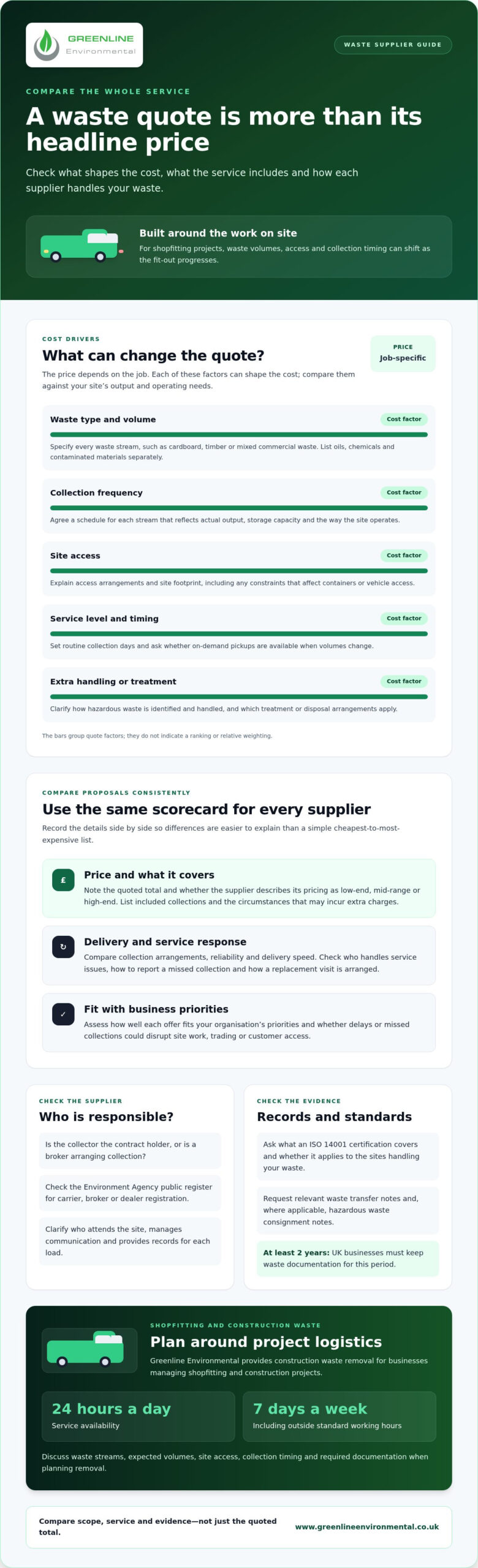
Use questions to ask a potential waste supplier to understand its market position: does it consider its pricing low-end, mid-range or high-end? Ask what informs that position and what service standards the quote reflects. This gives you context for comparing proposals without assuming the lowest figure offers the best value. Record each supplier’s explanation beside its quote.
Assess reliability and delivery speed alongside price. A cheaper proposal may be less suitable if missed or delayed collections would disrupt trading, site work or customer access. Consider the operational impact of a service failure, then compare each supplier’s stated approach to preventing and resolving problems. Apply the same priorities to every proposal.
Use a simple comparison table to keep your decision consistent. Include the quoted total, the supplier’s price positioning, evidence of service performance and how well the offer meets your organisation’s priorities. Questions to ask a potential waste supplier should help explain differences, rather than simply rank quotes from cheapest to most expensive. Share the comparison with the colleagues who will manage the service.
Choose the proposal that offers the strongest fit between cost, dependable delivery and your business priorities. Keep the comparison and agreed proposal together for future reviews. To discuss your requirements, request a quote.
Greenline Environmental: Construction Waste Removal
Greenline Environmental provides Construction Waste Removal for businesses managing shopfitting work and construction projects. For shopfitters, waste volumes and site access can shift as a fit-out progresses, so waste arrangements need to suit the project’s logistics. Services are available 24 hours a day, 7 days a week, supporting businesses that need collections outside standard working hours.
Discuss the waste streams, expected volumes, access arrangements, collection timing and required documentation when planning removal. This helps shape a service around the work taking place on site. Greenline Environmental also provides Event Waste Management and Confidential Waste Shredding for other commercial requirements.
To discuss Construction Waste Removal for your project, contact Greenline Environmental.
Set your next project up for a clear decision
Before selecting a supplier, turn your priorities into a short brief for your team to use when planning its next project. Questions to ask a potential waste supplier can help you frame the brief around the work, site access, collection needs and records your business requires. Share it with the people responsible for procurement and site operations so they can assess the same requirements and make a considered decision.
Greenline Environmental offers rapid clearance, office clearance and construction waste removal for commercial requirements. Choose the service that best matches the work ahead, whether you’re clearing a workspace or managing construction waste. A clear project brief gives the conversation a practical starting point.
Contact Greenline Environmental today to discuss your requirements and take the next step with confidence.
Frequently Asked Questions
Question 1: What Services Do You Offer?
Start by matching the service to the job, rather than asking for a general waste package. A shop refit may need a one-off clearance at handover, while an occupied office may need ongoing collections. Describe the materials, site activity and whether the requirement is temporary or recurring. This helps identify the right service scope and avoid including work your project doesn’t need.
Question 3: Direct Collector or Waste Broker?
A direct collector carries out the collection, while a broker arranges it through another operator. Clarify which organisation sets the commercial terms and handles booking changes. Ask whether the quote and contract come from the same business, and whose terms apply if arrangements change. This helps your procurement team understand the contracting relationship before approving the service.
What Types of Waste Removal Schedules Do You Offer?
Ask about planned collections and extra pickups, then establish how to arrange a change. For example, a shopfitting team might need a planned collection during a strip-out, followed by an additional removal before the new fixtures arrive. Agree the booking method and the information needed to request a collection, such as the site address, waste type and access instructions.
What Is Included in Waste Pickup?
Clarify the practical handover: where waste must be placed, how it should be separated and whether your staff need to move it to a collection point. For example, establish whether packaging and timber should remain in separate piles. Explain any site restrictions, such as a loading-bay procedure or narrow entrance, so the collection plan reflects the location.
Are You a Licensed Waste Carrier?
Ask the company for its waste-carrier registration details and make sure the registered business name matches the name on your service paperwork. Keep those details with the contract and collection records so the procurement or site team can refer to the correct operator later. This is particularly useful when different colleagues arrange collections across several premises.