
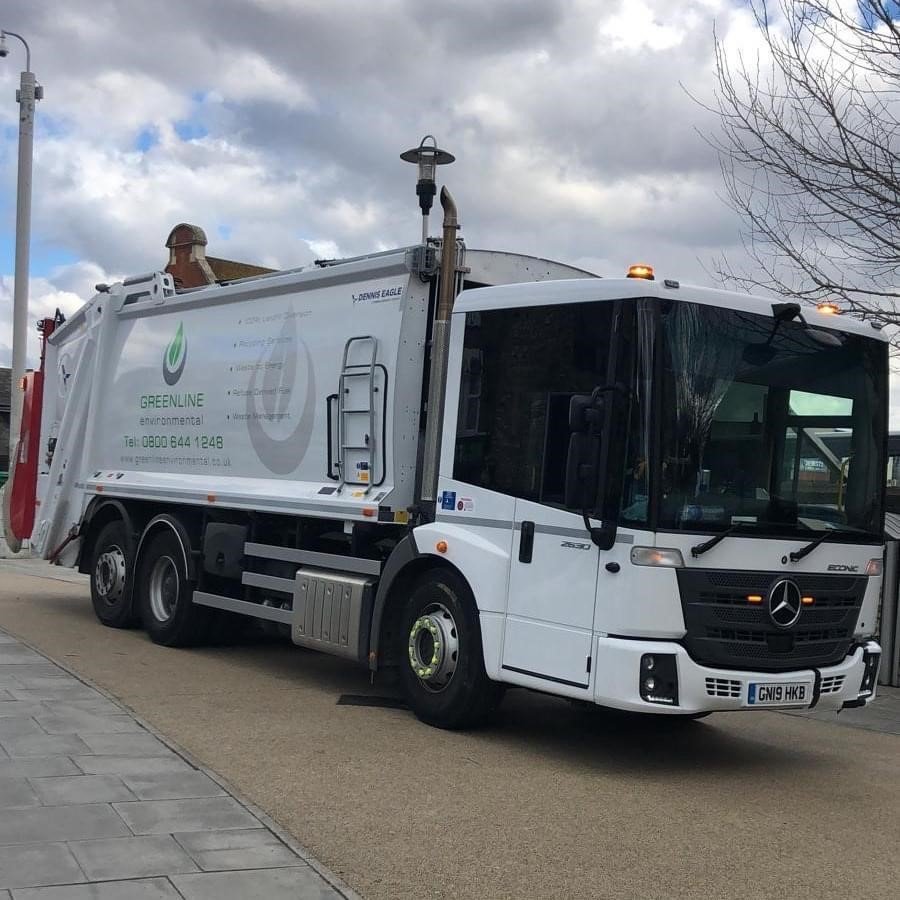
A skip doesn’t always need to stay on site. With a wait and load service, waste is loaded directly onto a vehicle while it waits, then taken away once loading is complete. The rubbish needs to be ready when the vehicle arrives, as customers typically have around 30 to 60 minutes to load it. This wait and load arrangement keeps the collection focused on a prepared, ready-to-remove load.
In Central London, limited space and difficult access can make a skip left on site impractical. This guide explains how wait and load works, when it suits a business or project, and what waste it can handle. You’ll also learn how to plan a collection, prepare waste and choose the right option for your site.
Key Takeaways
- Have waste ready and plan the loading process before the vehicle arrives to make the collection run smoothly.
- Consider this approach for Central London sites where space, access or keeping a skip on site presents a challenge.
- Shopfitters and businesses handling construction, event or clearance waste can use the guide to assess suitable collection needs.
- Learn how Greenline Environmental’s removal service can support commercial projects when waste needs to be cleared from a constrained site.
What is a wait and load skip?
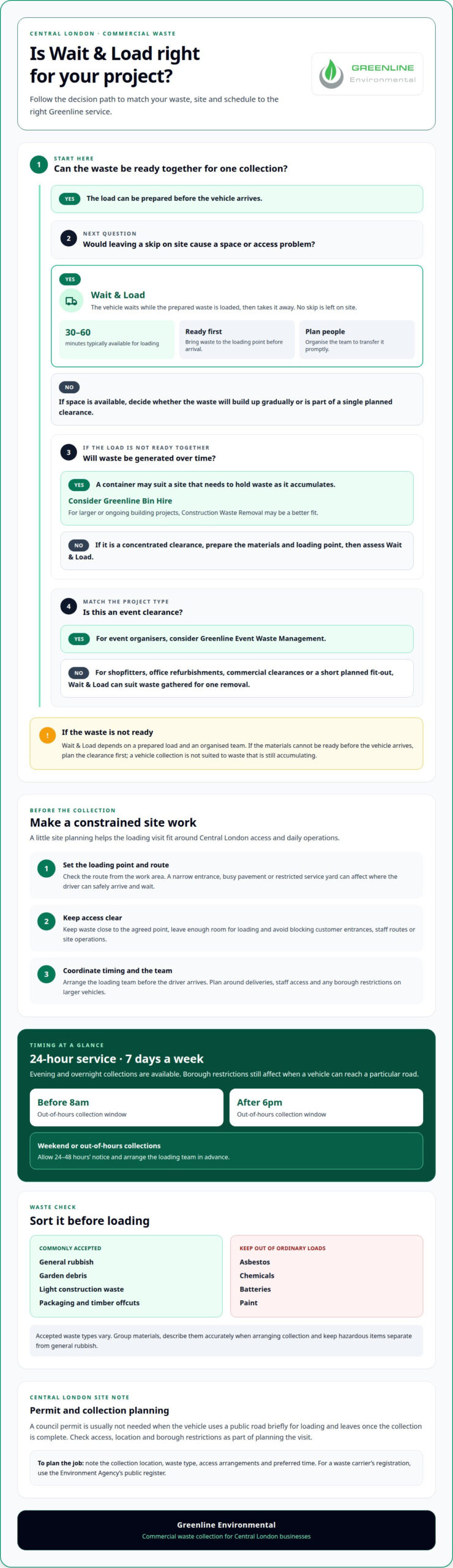
With wait and load, the collection vehicle arrives, waits whilst the rubbish is loaded, then takes the waste away. Prepare materials before arrival: customers typically have around 30 to 60 minutes for loading. For a shopfitting team, that means bringing waste to the loading point and organising people to transfer it promptly.
Traditional skip hire follows a different pattern. The skip remains at the site, typically for 14 days, giving a project team time to fill it. A wait and load collection removes the waste during the visit instead, which can suit a short clearance or a Central London site without room for a skip. A council permit is usually not needed when the vehicle leaves after loading.
Alternatives include standard skip hire and man-and-van removal. A skip can suit waste that accumulates over several days; a man-and-van service removes items without leaving a container on site. Choose based on the waste volume, site access and project schedule.
Restricted items include asbestos, chemicals, batteries and paint. Keep these separate from general rubbish, and never put hazardous waste into an ordinary load. For construction work, sort materials before the vehicle arrives and describe them accurately when arranging collection.
Ask how the operator separates waste for recycling or disposal, and what records they provide. You can check a waste carrier’s registration through the Environment Agency’s public register. For a Central London site with constrained access, a planned collection service can remove waste without leaving a skip in place.
Collections where space or access is limited
For Central London projects, a vehicle-based collection can suit a shopfront or site with little room for a skip. A council permit is usually not needed when the vehicle uses a public road briefly for loading and leaves once the collection is complete.
Restricted access and collection space
Before booking, identify the loading point and the route from the work area. A narrow entrance, busy pavement or restricted service yard can affect where the driver can safely arrive and wait. Keep waste close to the agreed collection point and leave enough space for loading. Shopfitters should plan removal around deliveries, staff access and site operations, without blocking a customer entrance.
Collection times and restrictions
Timing matters in Central London. Some boroughs may restrict larger vehicles on residential roads, so a collection time should account for the location and vehicle access. The service is available 24 hours a day, 7 days a week, including evenings and overnight; borough restrictions still shape when a vehicle can reach a particular road. Weekend and out-of-hours collections are another option for projects needing a quieter clearance window.
Out-of-hours means before 8am or after 6pm. Allow 24-48 hours’ notice for weekend or out-of-hours collections, and arrange the loading team before the driver arrives. This helps avoid delays and keeps the removal orderly. A skip service may be an alternative where space is available and waste will build up over time; a vehicle collection suits a short, planned clearance better.
For a site with tight access, request a collection quote with the address, access details and preferred time so the job can be planned responsibly.
Common uses for wait-and-load skips
Wait and load suits projects that generate a concentrated volume of waste in a short period. In London, this can include commercial clearances, demolition work, office refurbishments and garden clearances. Shopfitters can use the service to remove packaging and light construction waste during a planned fit-out, keeping work areas clear as the job progresses.
Commonly accepted materials include general rubbish, garden debris and light construction waste. A garden clearance might produce branches and soil, while a refurbishment can leave timber offcuts and packaging. Accepted waste types vary, so group materials before loading and describe them accurately when arranging collection. This helps the team understand what the vehicle needs to remove.
Separate ordinary project waste from hazardous items, and don’t assume every material from a garden or building site can go in the load. For construction work, list the waste types before booking. A dedicated Construction Waste Removal service can suit building projects that generate waste over time, rather than a single concentrated clearance.
Event clearances are another practical use. After a venue breakdown, a wait and load service can collect materials gathered for removal. A one-off commercial clearance can work similarly when rubbish is ready together. By contrast, a skip hire service may suit waste produced gradually. Choose based on how the project generates waste and whether it can be prepared for a single collection. Request a quote for your Central London waste collection with the waste types and project details.
Greenline Environmental: Wait and Load
Greenline Environmental provides Wait and Load for Central London businesses that need waste removed without leaving a skip on site. For shopfitters, the service can clear materials from a confined work area as the project progresses. Prepare the waste and loading point in advance so the collection fits the site’s access and working arrangements.
For larger or ongoing building projects, Construction Waste Removal may be a better fit. Event organisers can consider Event Waste Management, while Bin Hire can support sites that need a container for waste generated over time. Choose the option that matches the waste, the site and how the waste is produced.
Share the waste type, collection location and access arrangements when discussing your requirements. Contact Greenline Environmental to talk through the right waste removal option for your project.
Plan the clearance around your next project
Plan waste removal as part of the project, not as a final-stage task. For shopfitters in Central London, coordinate collection with deliveries, work sequencing and site access. Assign someone to oversee the loading area and keep it clear of customer and staff routes. These steps help the team manage the clearance while work continues.
A wait and load collection can suit a project when materials are ready to leave and a skip would obstruct the site. Build the removal arrangements into your schedule, then share the location, waste type and access details when requesting support. Greenline Environmental can help businesses plan a suitable collection for their project. Discuss your waste removal requirements and take the next step with a clear plan.
Frequently Asked Questions
When Do You Pay?
Payment may be taken when you book or on collection day, after the waste has been loaded and weighed. The process depends on the provider’s booking and weighing arrangements. Before the vehicle arrives, make sure the person arranging collection understands how payment will be handled and can approve it for the business.
Who Can Benefit from This Service?
Businesses with a one-off clearance and limited room for a skip can benefit, including shopfitters, offices and event teams. It can be useful for commercial sites in EC1, EC2, EC3, EC4, WC1, WC2, E1, SE1, SW1, SW8, SW7 and SW3. It suits projects where waste is ready to remove rather than accumulating over time.
What does “wait and load” mean in the UK?
In the UK, wait and load means a vehicle arrives at a collection address, waits while the customer loads the waste, then takes it away. Unlike a skip left on site, the vehicle does not remain as a waste container. Businesses often consider the service for a planned clearance when leaving equipment on site would disrupt work.
How does a wait-and-load removal service work?
First, tell the provider what waste you have and where it needs to be collected. Gather accepted materials near the loading point, keeping different waste types separate. When the vehicle arrives, load the prepared items during the agreed collection window. This preparation helps the team manage the clearance efficiently and avoids confusion about what belongs in the load.
How long can a wait-and-load vehicle stay at a collection address?
The loading window is typically around 30 to 60 minutes, so have the waste ready before the vehicle arrives. The exact time spent at the address depends on how quickly the load can be transferred and the volume involved. Keep the route between the waste and loading point clear, and organise staff before collection begins.