
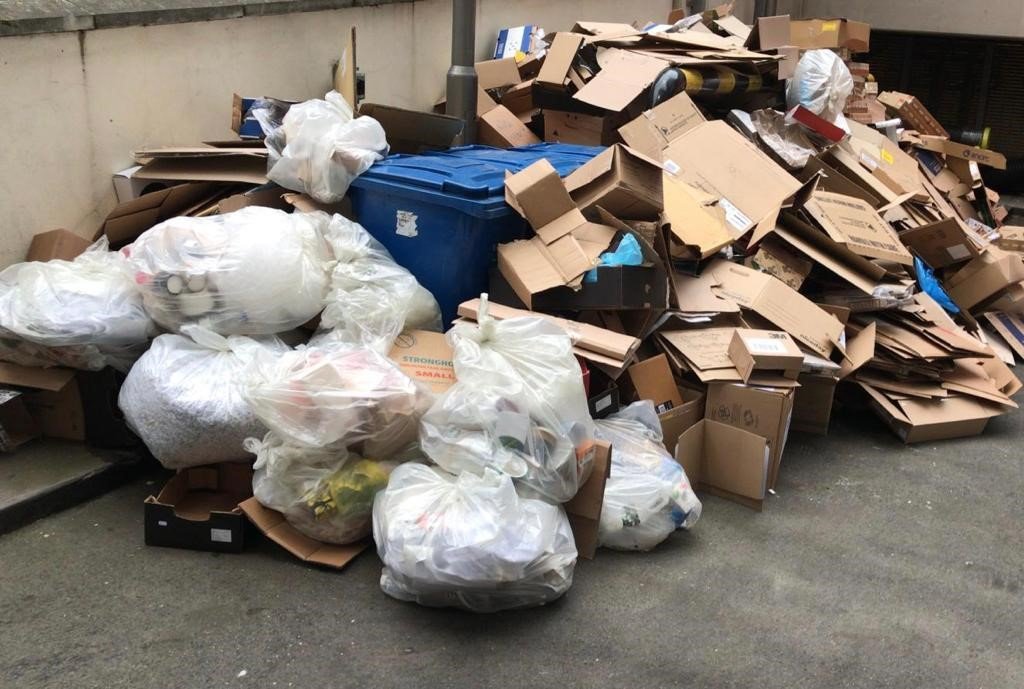
The quickest rubbish clearance option isn’t always a skip. For a small, accessible load, man-and-van removal can be more practical; larger or ongoing building-site waste may be better suited to a skip. For shopfitters and busy Central London businesses, access, waste volume and how quickly a work area needs clearing all shape the decision.
It’s understandable to want waste removed promptly and with minimal disruption. This guide compares man-and-van removal with skip hire, explains what affects the choice for homes, businesses and construction sites, and outlines how different materials can be recycled or disposed of responsibly. You’ll also find practical points to consider when arranging a clearance, so you can plan the work around your site and schedule.
Key Takeaways
- Match the removal method to the load, site access and how long waste will build up before collection.
- Check a waste carrier’s registration on the UK public register before arranging a collection.
- Separate construction materials where practical to support appropriate recycling and disposal.
- For building-site waste, Greenline Environmental’s Construction Waste Removal can help keep clearance organised around project needs.
Man-and-van rubbish removal as an alternative to skip hire
Man-and-van collection removes a prepared load, while skip hire leaves a container for waste you gather over time. The right option depends on the load size, site access and how long the clearance will take. In Central London, a vehicle collection can suit a shopfitter removing fittings from a unit with little room for a skip. Rubbish clearance can include collecting, loading and removing unwanted items for appropriate recovery or disposal.
Domestic, Commercial and Industrial Collections
Domestic, commercial and industrial clearances involve different materials and access requirements. A household load might include unwanted furniture; a shopfitter may need display fittings and packaging removed, while an industrial site may have mixed materials. List what needs collecting, where it is stored and whether a vehicle can reach the loading point. For fly-tipped waste on private land, note its location and visible contents when arranging removal.
Checking a Waste Carrier Licence
UK rubbish removal companies must be registered as waste carriers with the Environment Agency. To check a company, enter its business name in the public register of waste carriers, brokers and dealers, according to the UK Government. To find a registered company near you, search for removal services serving your area, then match the business name against the register before booking.
Preparing for Collection and Special Items
Before collection, group items by type, make a list and explain access details such as stairs, loading bays or restricted entry. Name large furniture, electrical appliances and any unusual materials separately, as these may need different handling from a general mixed load. For building work in Central London, explain the site schedule and loading arrangements; building-site clearance planning can account for ongoing activity.
Waste recycling and disposal
Responsible disposal starts by sorting materials by type. Where practical, keep clean cardboard, metal, glass and suitable plastics separate so they can be directed towards recovery instead of mixed with general rubbish. During a shop refit, separating packaging from broken fittings makes the waste streams clearer and easier to manage.
For household waste in the UK, follow your local council’s collection arrangements and separate accepted recyclables from residual rubbish. Rules vary by area, so check which materials go in each collection. Garden waste, for example, may be collected separately from household recycling and general waste.
Diverting waste from landfill depends on the load and whether its materials can be reused or recycled. Unmixed wood, metal and cardboard are easier to identify for recovery than materials combined in a mixed load. Keep reusable items apart from damaged or contaminated waste, and describe the contents when arranging collection so the waste removal plan accounts for the materials and access.
Recycling and disposal are related but different: recycling recovers usable material, while disposal handles waste that cannot be recovered. A clear record of what leaves a home, office or site helps show how it was managed. For example, a clearance containing furniture, packaging and garden waste may need sorting into separate streams before the remaining material is disposed of responsibly.
During fly-tipping clearance, the Scottish Government describes the work as including clean-up, treatment and disposal. This illustrates why collecting dumped waste is only one part of managing it properly. Before arranging rubbish removal, group similar materials and identify anything unusual, such as damaged appliances, so the collection can be planned around the contents.
Construction and site clearance
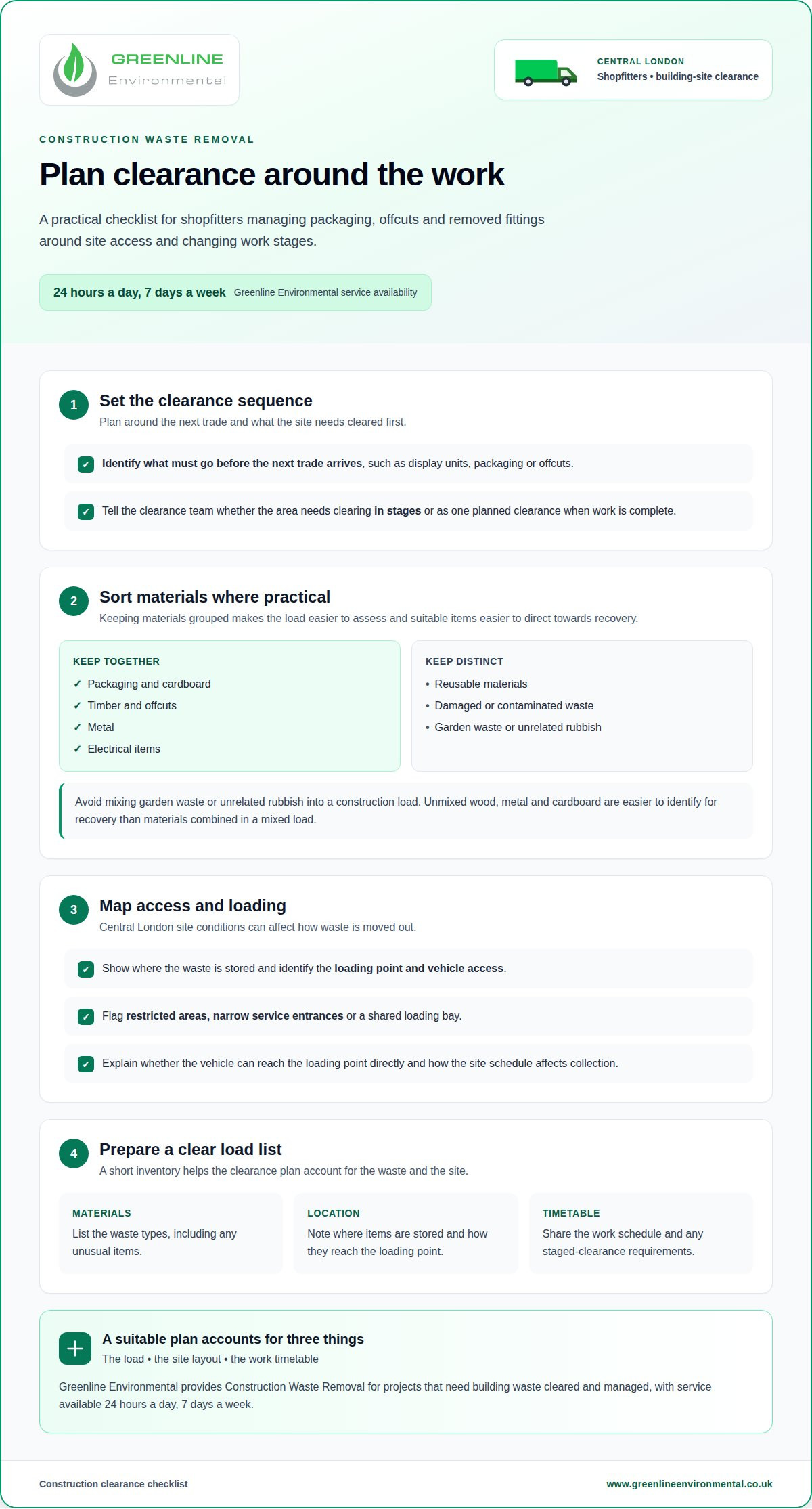
Construction clearance needs to follow the work sequence, not just the final tidy-up. A shopfitter removing display units, packaging and offcuts should identify what must go before the next trade arrives. Separate reusable materials from mixed debris, and keep electrical items apart from timber, metal and cardboard. This makes loads easier to assess and helps direct suitable materials towards recovery.
Before arranging a clearance service, map the loading point, vehicle access and any restricted areas. In Central London, a narrow service entrance or shared loading bay can affect how waste is moved from the work area. Tell the clearance company what materials are present, where they are stored and whether the builder needs the area cleared in stages. Clear instructions reduce avoidable handling and site hassle.
For ongoing work, plan collections around changing waste streams. Early strip-out may produce fittings and packaging; later stages can leave timber offcuts, metal and electrical equipment. Keep each type grouped where practical, and avoid mixing garden waste or unrelated rubbish into a construction load. A list of materials helps the team handle the right items and supports responsible waste management.
A suitable removal plan should account for the load, site layout and work timetable. Choose a licensed clearance company and explain whether vehicles can reach the loading point directly. For a one-off shop refit, staged collections may keep access clear; for a completed site, a single planned clearance may suit better. If your project needs construction waste removed, request a construction clearance quote with the materials and access details.
Greenline Environmental: Construction Waste Removal
Greenline Environmental provides Construction Waste Removal for projects that need building waste cleared and managed. For Central London shopfitters, this can support a refit where packaging, offcuts and removed fittings need handling around ongoing work. Its building-site clearance service can help organise waste removal around site logistics. Services are available 24 hours a day, 7 days a week, helping businesses plan clearance around their operating needs.
When arranging a project clearance, share the waste types, site access and work schedule. These details help the team plan, particularly when loading areas are restricted or trades are working in sequence. For related business needs, Greenline Environmental also provides Event Waste Management and Confidential Waste Shredding.
Contact Greenline Environmental to discuss construction waste removal for your site.
Plan your next clearance with confidence
Build waste planning into the project brief rather than leaving it until the final day. Decide who will coordinate collections, list the materials involved and plan how clearance fits around deliveries and ongoing work. For Central London shopfitters, this preparation helps keep work areas organised as each stage progresses.
Greenline Environmental provides Construction Waste Removal, rapid vehicle loading services and Office Clearance for different business requirements. When arranging rubbish clearance, share the type of work and site details so the plan suits the job.
Contact Greenline Environmental about your clearance requirements, and take the next step towards a well-organised site.
Frequently Asked Questions
Looking for Quick Rubbish Collection?
For an urgent commercial collection, provide the waste type, approximate load and precise collection address when arranging a booking. In Central London, details such as the loading-bay location, building access and site contact help organise the visit. Greenline Environmental’s Wait and Load service suits businesses that can load waste directly into a waiting vehicle.
Need to Dispose of Something?
For business waste, identify the items and where they come from before arranging removal. A shopfitter clearing a unit, for example, can separate fittings, packaging and office equipment to help plan the job. Businesses with sensitive paperwork can use Confidential Waste Shredding, which is separate from ordinary mixed-waste collection.
How much does rubbish clearance cost in the UK?
The price depends on the job and is given after a quote request. Factors include the amount and weight of waste, the labour required, transport and disposal costs. For a commercial office clearance in EC2, for example, the load contents and access arrangements help shape the assessment. Share clear details to receive a relevant quote.
How are rubbish clearance prices calculated by volume, weight or item?
A load may be assessed by volume, weight or the items being removed. Bulky furniture can take up considerable vehicle space, while dense materials may weigh more despite taking up less room. An item-based assessment can distinguish a single appliance from a mixed office load. Describe the contents accurately so the quote reflects the work involved.
What happens if rubbish is fly-tipped by a clearance company?
Keep booking records, payment receipts and messages. If it is safe, photograph the dumped waste and its location, and note any vehicle or company details you already have. Report the incident to the local council and share the evidence, including the collection date and waste description. Avoid handling unknown materials; clear records can help authorities investigate.