
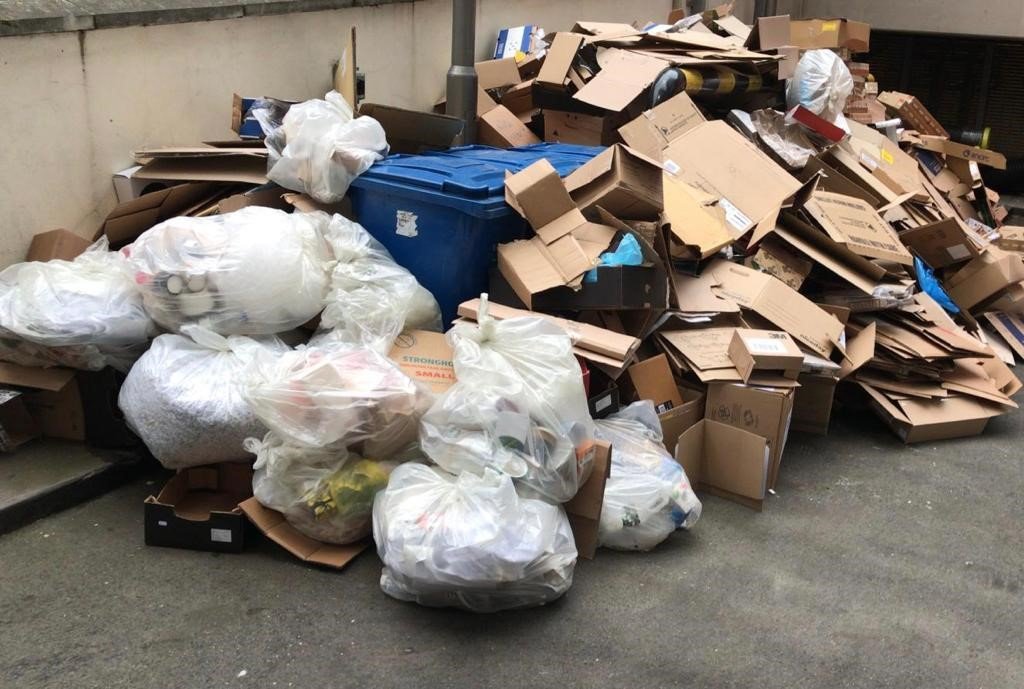
A waste load leaving site isn’t the end of your compliance responsibility; it’s where traceability is tested. Good compliance for construction site waste depends on clear decisions from the moment materials are identified through to their final transfer. Since 1 October 2026, permitted waste-receiving sites in England and Wales have been required to use the digital “Report receipt of waste” service, making accurate waste information more important than ever.
On a busy project, it’s easy for segregation, storage or transfer paperwork to slip down the list. Tight space and restricted access can add pressure, particularly on Central London sites. A simple process helps your team stay in control and show how each waste stream was managed.
This practical checklist sets out what to identify, separate, store and record, as well as how to clarify responsibilities and plan collections around site operations. It also explains how a documented site waste process can work alongside construction waste removal and consultancy, helping keep materials moving responsibly without losing sight of the evidence.
Key Takeaways
- Understand what compliance for construction site waste involves in England, and why requirements may differ elsewhere in the UK.
- Start waste classification by identifying each material and how it was produced, then plan appropriate handling for each stream.
- Match bins, site clearance or wait-and-load to your waste volumes, available space and site access.
- Build a practical process that assigns responsibility and plans waste arrangements before work begins.
- See how Greenline’s construction waste removal, site clearance and bin hire can support a documented site process, including on space-limited London projects.
Compliance for construction site waste: what responsibility covers
Compliant construction waste management means identifying waste, keeping it safely under control and ensuring each transfer is properly documented and traceable. A clear process matters because environmental controls and site safety overlap, but they are not the same thing. A clean, orderly work area helps reduce hazards; it doesn’t, by itself, prove that waste was correctly classified or transferred.
This guide focuses on England. Waste rules and guidance can differ across the UK, so teams working in Scotland, Wales or Northern Ireland should check the relevant national requirements. In England, don’t rely on old claims about legal thresholds for Site Waste Management Plans. Check current official guidance and any project or client requirements before deciding which planning documents apply.
Construction and demolition waste covers materials from building, renovation and demolition activities. The term is explored in this overview of construction and demolition waste. On site, the practical task is to understand what each material is and manage it appropriately from generation through transfer.
Who is responsible for construction site waste?
What does site waste compliance mean in practice?
Think of compliance for construction site waste as a chain of linked controls. Identify each stream, separate materials where required, store them safely, record the necessary information and arrange an appropriate transfer. If one step is missed, the site may struggle to show what happened to the waste after it left.
Reflect these controls in site procedures and records. For example, note the expected waste streams, where they will be stored, who checks them and how collections are recorded. HSE housekeeping guidance addresses safe, orderly working conditions; environmental waste management also needs evidence of classification and transfer. Keep both in view.
Where a project also needs bulky materials cleared, Greenline provides bulky waste removal. Whatever collection arrangement is used, keep it connected to the site’s documented process. Tidy is a good start. Traceable is the standard to aim for.
Classify construction waste and keep its transfer traceable
Broadly, teams may encounter inert waste, non-hazardous waste, mixed waste and materials that may be hazardous. These terms have specific meanings in waste classification. Don’t assume a material is harmless from its appearance or rely on a broad label such as “builders’ waste” where a more precise description is needed. If its status is uncertain, consult current Environment Agency or GOV.UK classification guidance before assigning a code or arranging transfer.
Accurate classification connects each waste stream to suitable handling, a clear transfer description and records that show where it went. Mixing materials can make recovery more difficult and leave transfer records less precise. Separation is therefore about more than neat storage; it supports a consistent account of the waste from the work area to collection.
How should site teams identify and separate waste streams?
What records should accompany a waste transfer?
A Waste Transfer Note (WTN) records the handover of non-hazardous waste and helps create a traceable link between the waste leaving site and its onward destination. Keep the record aligned with the actual load. In practical terms, capture a clear waste description, the transfer date, the parties involved, and details that identify the carrier and destination. Make sure the information is accurate and retain the completed record in the project file.
For help building a project-specific approach to classification and records, Greenline’s construction waste consultancy can support planning. You can also discuss your construction waste requirements.
Compare construction waste collection options without losing control
A skip or collection is a way to move waste, not proof that it has been managed compliantly. The site team still needs to identify and sort materials, store them safely and keep the transfer records that apply. The right arrangement depends on the waste volume, how regularly it’s produced and the space and access available.
That balance is especially important in Central London, where a site may have limited room for containers, restricted vehicle access or busy pedestrian routes. There’s no single collection method that suits every project. Assess the site layout alongside the work schedule, then plan how waste will be kept secure and collected without disrupting essential operations.
When might bins, skips or wait-and-load suit a project?
Bins can support planned, ongoing separation when there’s room to position them and keep each stream distinct. Skips may suit projects with space for a container and a suitable collection arrangement. Wait-and-load can be useful where a container can’t remain on site, but it requires coordination around the loading area, vehicle access and timing. Greenline provides construction bin hire and wait-and-load services, with arrangements suited to the project’s site conditions.
For larger volumes or a site that needs accumulated materials removed as part of a coordinated operation, site clearance may be appropriate. Greenline’s construction site clearance guide provides more context on the wider logistics. Whichever option is used, the collection plan should match the waste description and the site’s documented handling process.
How can site layout affect safe waste storage and collection?
Map where waste arises, where it can be stored and how it will reach the collection point. Check that vehicle access and loading arrangements work alongside pedestrian routes, deliveries and site activities. Storage areas should be clearly organised and kept from obstructing walkways or creating avoidable hazards, in line with good site housekeeping practice.
Before confirming an arrangement, walk through the collection sequence with the site team: who prepares each load, who keeps access clear and who records the handover? This is particularly useful when space is tight or several contractors share the site. Greenline’s construction waste consultancy can help project teams plan waste arrangements around site constraints.
Good logistics support compliance for construction site waste, but they don’t replace classification, segregation or records. Keep those controls in place whatever collection method you choose.
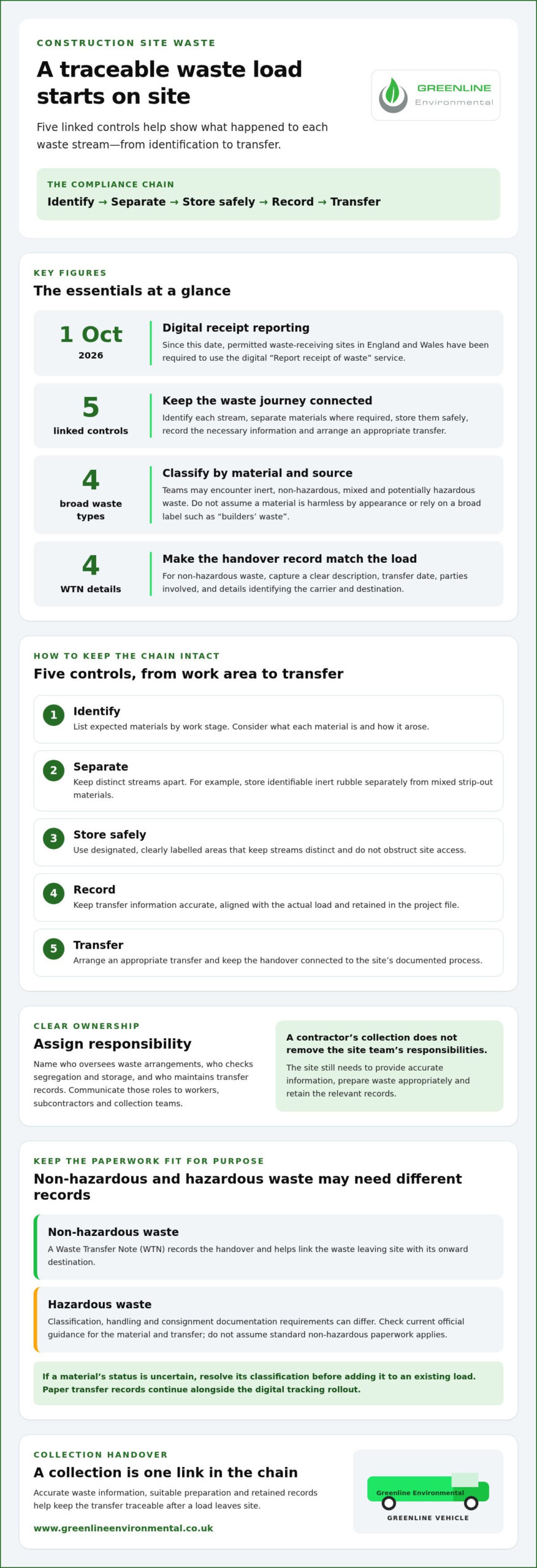
Use this construction site waste compliance checklist
A repeatable routine turns compliance for construction site waste into practical site controls. Assign an owner, make the arrangements visible to the people doing the work and revisit them when the project changes. The process below is a planning aid, not legal advice; confirm current requirements against official guidance for the waste and work involved.
What to check before work and waste collection begin
Before each phase starts, identify the materials likely to arise and where they will be generated. Note any unfamiliar or potentially hazardous materials that need assessment before the team decides how to handle them. Avoid treating uncertainty as permission to mix a material into a general load.
- Responsibility: Name who oversees waste arrangements, checks storage and segregation, and keeps transfer records. Brief workers, subcontractors and collection teams on their roles.
- Streams and storage: Record expected waste types and designate suitable, clearly identified areas to keep them separate and safely contained.
- Access and collection: Identify the loading point, vehicle access and safe routes for people moving around the site. Plan collection arrangements around the location, available space and working pattern.
On a restricted Central London site, for example, the collection point and storage plan need to account for limited space and access without blocking pedestrian routes or disrupting work. Greenline’s construction waste consultancy can support project teams with planning arrangements around site constraints.
What to check during and after each collection
Keep the routine active as work progresses. Check that materials remain in their designated areas, labels are clear and storage does not obstruct walkways, loading areas or other site activity. If a work phase changes the waste being produced, update the arrangements rather than relying on the original plan.
At collection, compare the load with its description and the applicable transfer record. Resolve any mismatch before treating the handover as complete, then file the record with the project documentation. Afterwards, note recurring issues, such as mixed materials or blocked access, and adjust storage or collection planning to prevent a repeat.
In brief: assign responsibility, plan streams and access, maintain safe separation, then match each collection to its record and retain the evidence. This routine helps teams organise day-to-day controls, but it doesn’t determine every legal requirement; use current official guidance where classification or documentation is uncertain.
Request a quote for construction waste removal to plan a collection around your project’s site arrangements.
Manage construction waste compliantly with Greenline in London
Construction waste removal works best as part of a documented site process, not as a replacement for the project team’s responsibilities. Greenline Environmental provides construction waste removal, construction bin hire and building site clearance across Central London and the South East. Its service operates 24 hours a day, seven days a week, supporting projects that need collection planning to fit busy urban sites.
Each project has different constraints. A site with ongoing, separated waste streams may need a different arrangement from one requiring a clearance at the end of a work phase. Limited storage, restricted vehicle access and the location of loading areas all affect how collections can be coordinated. The site team remains responsible for identifying and preparing waste correctly, and keeping the relevant records.
How Greenline can support construction waste planning
Greenline’s building and construction waste consultancy can support project planning by connecting collection arrangements with the site’s access, expected waste streams and work phases. Planning these details together helps teams consider how waste will be separated, stored and moved to a collection point without impeding site operations.
Construction bin hire can support ongoing waste arrangements where suitable space is available. For a project that needs materials cleared from site as work progresses or reaches a particular stage, building site clearance may be a better fit. Greenline works with local disposal partners focused on diverting waste from landfill through recycling, reuse and energy recovery. The route depends on the material and the arrangements for the load; outcomes aren’t guaranteed.
Arrange construction waste removal for your project
To request a tailored quote, share the site location, the types of waste expected, an estimate of the volume, the project phase and any access or storage constraints. Explain whether you’re planning regular collections, bin hire or a site clearance. These details help shape an arrangement around the practical conditions on site.
Collection is one part of compliance for construction site waste. Keep classification, segregation, safe storage and transfer records within your project’s own process, and coordinate the collection around those controls.
Request a construction waste quote to discuss your project’s collection requirements.
Put a clear waste process into practice
Reliable compliance for construction site waste starts with clear decisions: identify each waste stream, assign responsibility, keep materials appropriately separated and stored, then match every collection to its transfer records. Review the arrangements as work phases change, so site teams can maintain safe, traceable handling from start to handover.
Collections should fit the project, not disrupt it. Greenline provides construction waste removal, site clearance, construction bin hire and waste consultancy across Central London and the South East. Services operate 24 hours a day, seven days a week, with planning shaped around site access, available space and project requirements. Local disposal partners focus on recycling, reuse and energy recovery, supporting more responsible management of construction materials.
Share your site location, waste streams, expected volumes and access requirements to discuss a suitable arrangement. Request a construction waste quote and take the next step towards an organised, dependable process for your project.
Frequently Asked Questions
What does compliance for construction site waste involve?
Compliance for construction site waste involves identifying each waste stream, separating and storing it appropriately, arranging a suitable transfer and keeping records that show what happened to the waste. Assign clear responsibilities so workers know how to handle materials and who records collections. A tidy site supports safe working, but it doesn’t by itself demonstrate that waste was correctly classified or transferred.
Is a Site Waste Management Plan legally required for every construction project in England?
No. The regulations that made Site Waste Management Plans a legal requirement in England were repealed in 2013. A plan can still be useful for setting out expected waste streams, responsibilities, storage and collection arrangements. Clients, contracts or project assessment requirements may call for one, so check current official guidance and the specific requirements that apply to your project.
What documents are needed when construction waste leaves a site?
For a non-hazardous waste transfer, a Waste Transfer Note records key handover details, including the waste description, date and parties involved. Keep the record with the project files and ensure it matches the load. Hazardous waste can require different documentation, such as a consignment note. The correct records depend on the waste classification and transfer, so use current official guidance for uncertain materials.
How should construction waste be separated on site?
Identify materials by what they are and how they arose, then use designated, clearly labelled areas to keep different streams distinct. Separate materials such as inert rubble, timber and mixed strip-out waste where the site arrangements allow. Keep storage organised and out of walkways. If a material’s classification is unclear or it may be hazardous, consult current official guidance before deciding how to store or transfer it.
Can construction waste be mixed in one skip?
Some projects may use a mixed-waste collection, but putting different materials together can make recovery harder and the waste description less precise. Don’t mix materials if their classification or handling requirements differ, especially where a load may contain potentially hazardous waste. Decide the arrangement according to the waste streams, site process and receiving route, and make sure the transfer record accurately describes what is collected.
Who is responsible for construction waste compliance on site?
Responsibility should be clearly assigned across the project team, with named people overseeing waste arrangements, segregation, safe storage and records. Communicate the process to workers, subcontractors and collection teams so handovers are clear. Using a waste contractor for collection doesn’t remove the site team’s responsibilities. The team still needs to provide accurate information, prepare the waste appropriately and retain relevant transfer documents.
How can a London construction site manage waste when space is limited?
Plan storage and collections around the site’s waste streams, loading area, vehicle access and pedestrian routes. On sites across EC1-EC4, WC1-WC2, E1, SE1, SW1, SW3, SW7 and SW8, limited space can make collection timing and layout especially important. Consider whether bins, site clearance or wait-and-load best fits the project, while keeping waste separated and access routes clear.