
What if the waste from your office move could protect your schedule and support your sustainability reporting, rather than become a last-minute liability? For London businesses, tight handover deadlines often come with restricted loading space, parking and permit complications, disposal costs and the need to destroy sensitive paperwork securely. Effective London office relocation waste management makes clearance a planned part of the move, not a disruption left for the final day.
You need a clean exit, the right Waste Transfer Notes and organised recycling records, without staff losing hours to clearance logistics. This guide explains how to plan waste streams, assess furniture and electrical equipment, safeguard confidential documents and choose an approach that suits busy London streets. Greenline Environmental provides office clearance and Wait and Load services, with 24/7 availability for out-of-hours relocations. That helps businesses and shopfitters coordinate waste removal around the work on site.
Key Takeaways
- Plan London office relocation waste management with a pre-move audit of furniture, IT equipment and other items before packing begins.
- Separate electrical equipment, furniture and confidential paper so each stream can follow an appropriate route.
- Compare clearance logistics with street access in mind. Wait and Load can avoid skip-related permit complications.
- Organise waste records and schedule clearance around the move, including out-of-hours collections through Greenline’s 24/7 service.
Strategic Planning for London Office Relocation Waste
Map out when waste can leave, then agree lift access, loading bay availability and site rules with the building manager. Arrangements differ across London boroughs; the overview of Waste disposal in London provides useful background on local authorities and practices.
The Pre-Move Waste Audit
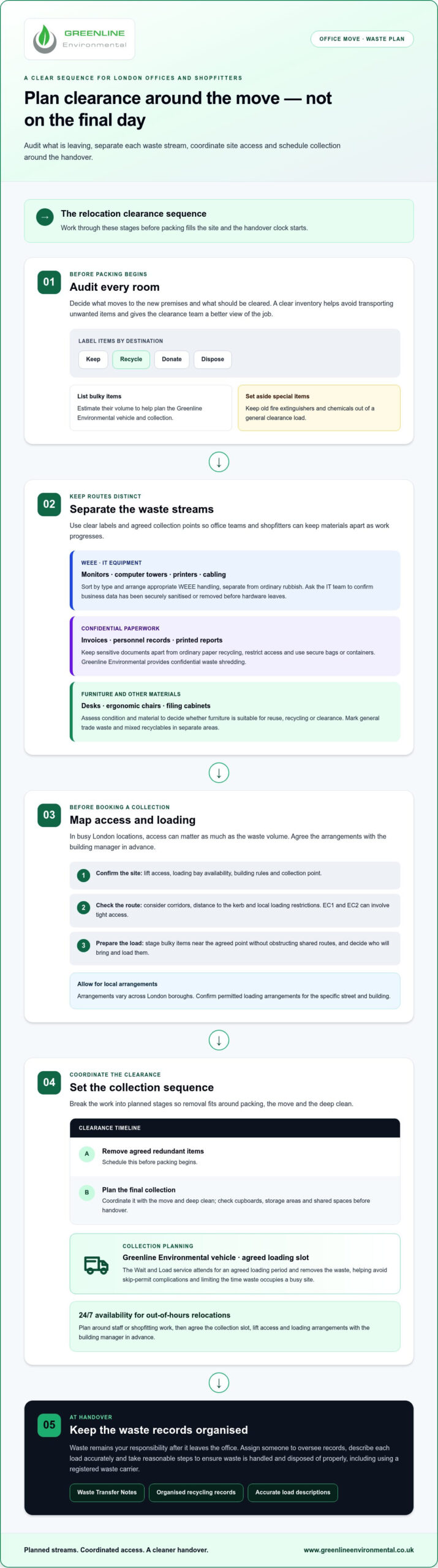
Walk through each room and label items “keep”, “recycle”, “donate” or “dispose”. Retain desks only if they suit the new layout, for example, and separate working IT equipment from obsolete devices for appropriate handling. Put items such as old fire extinguishers or chemicals aside rather than including them in a general clearance load. Make a list of bulky items and estimate their volume to help plan the Greenline vehicle and collection. Greenline’s office clearance service can support this planned removal.
Timeline Coordination
Break the clearance into stages: remove agreed redundant items before packing, then schedule the final collection around the move and deep clean. If daytime access would interrupt staff or shopfitting work, Greenline’s 24/7 service allows out-of-hours planning. Agree the collection slot, lift access and loading arrangements with the building manager in advance. Leave time to check cupboards, storage areas and shared spaces before handover. If a relocation coincides with a launch or site event, Greenline also provides event waste management.
Segmenting Waste Streams: WEEE, Furniture, and Paper
Keep different waste streams separate during a relocation. Mixing everything into general rubbish can make recycling harder and increase the risk of overlooking electrical equipment or sensitive paperwork. Clear labels and agreed collection points help office teams and shopfitters maintain separation as work progresses. This is a practical foundation for London office relocation waste management, especially when several crews are clearing the same site.
WEEE Waste and IT Asset Disposal
Monitors, computer towers, printers and cabling need a separate route from ordinary rubbish. Sort equipment by type and arrange appropriate WEEE handling rather than placing it in a mixed load. Before hardware leaves the premises, ask your IT team to confirm that business data has been securely sanitised or removed. Include electrical items in the clearance plan so they can be identified and kept apart from general waste.
Confidential Waste and GDPR Compliance
Paper clear-outs can uncover more than outdated forms. Invoices, personnel records and printed reports may contain sensitive business information. Keep confidential documents apart from ordinary paper recycling, restrict access while they await collection and use secure bags or containers to prevent casual viewing. Greenline provides confidential waste shredding for secure document destruction.
Assess furniture separately. Desks, ergonomic chairs and filing cabinets may be suitable for reuse, recycling or clearance, depending on their condition and material. Keep general trade waste and mixed recyclables in clearly marked, separate areas, and tell staff what belongs where. Greenline can coordinate collection using a Greenline vehicle as part of the clearance plan. For a tailored approach to your office’s waste streams, request a quote for your clearance.
Logistical Solutions: Wait and Load vs. Skip Hire
In central London, the best clearance option depends on access as much as volume. Narrow streets, Red Routes, limited loading bays and restricted space can make a stationary skip difficult to accommodate. A skip may suit a site with suitable space and time for a permit process. For a busy office move, its footprint and the coordination involved can add pressure. Compare the full logistics, including permit arrangements, any parking suspensions, loading labour and how long waste will remain on site.
The Wait and Load Advantage in London
With Wait and Load, the vehicle attends for an agreed loading period and removes the waste, rather than leaving a skip in place. This can avoid skip-permit complications and reduce the time waste occupies a busy site. It also limits the time an unattended skip is available for other people to add unwanted items. Greenline’s Wait and Load service suits shopfitters and relocation teams coordinating a defined clearance slot. Plan who will bring items to the loading point and who will load them, so the Greenline vehicle’s attendance is used efficiently.
Navigating Streets and Loading Restrictions
Before booking, map the route from the office to the loading bay, check building access arrangements and account for lifts, corridors and the distance to the kerb. In EC1 and EC2, for example, a vehicle may need to work around tight access and local loading restrictions. Off-peak timing can help reduce conflict with staff, deliveries and traffic, but confirm the permitted loading arrangements for the specific street and building.
For multi-storey clearances, stage bulky items near the agreed collection point without obstructing shared routes. A Greenline vehicle can collect the prepared load as part of a coordinated plan. This comparison helps make London office relocation waste management more predictable and keeps clearance aligned with the move. Request a quote for your clearance to plan collection around your site logistics.
Legal Compliance and Environmental Responsibility
Waste remains your responsibility after it leaves the office. Under the business Duty of Care, you must take reasonable steps to ensure it is handled and disposed of properly, including using a registered waste carrier. For a relocation, assign someone to oversee records and make sure each load is described accurately. Strong London office relocation waste management supports responsible handling as well as a clear record of the move.
Duty of Care Obligations
Check the carrier’s details on the Environment Agency public register before collection, and keep a copy of the relevant Waste Transfer Note (WTN) for each transfer of non-hazardous business waste. The note records what was transferred and who handled it; retain it for two years. Keep the paperwork with your move records so it can be found if questions arise later. For a complex clearance, list each waste stream and collection stage in the plan, then file the relevant records together.
Sustainability and Landfill Diversion
Compliance is the baseline. To support ESG reporting, track what happens to each stream after collection rather than relying on a broad claim that waste was recycled. Keep records that distinguish reuse, recycling and recovery, and use the information consistently in stakeholder updates and annual reports. Materials that cannot be reused or recycled may follow other appropriate recovery or disposal routes; the outcome depends on the waste type and its condition.
Greenline works with local disposal partners dedicated to diverting waste from landfill through recycling, reuse and energy recovery. Keep collection records and recycling information together to maintain a clear audit trail for reporting. For help planning waste handling for your relocation, request a quote for waste management support.
Partnering with Greenline for a Seamless Move
A relocation runs more smoothly when waste clearance follows the same schedule as the move. Greenline Environmental supports London businesses and shopfitters with office clearance planned around the site, the volume of material and the handover timetable. Share the collection address, access arrangements, waste streams and target dates early. These details give the clearance plan a practical foundation and help prevent redundant items from obstructing fit-out or moving work.
Tailored Office Clearance Solutions
Every office has a different mix of furniture, equipment and general clearance waste. A smaller workspace may need a focused collection, while a corporate premises or shopfitting project can require staged removal across several areas. Greenline coordinates office clearance with your team so removal supports progress on site. Include the rooms, bulky items and any access restrictions in your relocation plan, then explore Greenline’s office clearance service as part of the move.
Out-of-Hours Support for Tight Handover Schedules
Greenline’s 24/7 availability lets businesses and shopfitters plan collections outside standard working hours, helping limit disruption to staff and work on site. An overnight clearance may suit a particular handover plan, with timing arranged around building access, loading arrangements and the volume ready for collection. A Greenline vehicle can be scheduled as part of the plan, helping coordinate clearance with the rest of the move.
For time-sensitive projects, clear communication matters. Set out what needs removing, what must remain and when access is available. This aligns collection with the relocation sequence and gives the team a shared plan if additional clearance needs arise. A considered approach to London office relocation waste management helps protect the schedule while leaving the premises ready for its next stage. Arrange a quote for your office clearance around your move requirements.
Set Your Move Up for a Clean Handover
Before the relocation date is fixed, give one person clear responsibility for coordinating waste clearance with the move and premises handover. This keeps access details, collection timing and outstanding items visible instead of leaving them to the final hours. It also gives shopfitters and office teams a clear point of contact as work progresses.
Choose a clearance plan that fits your schedule and keeps the site orderly. Greenline Environmental provides office clearance and waste management services for London businesses, including Wait and Load for planned collections. With the arrangements in hand, your team can focus on settling into the new workspace and completing the move.
Plan your London office clearance with Greenline Environmental, and take the next step towards a clean, well-managed handover.
Frequently Asked Questions
Do I need a permit for waste removal during an office move in London?
Not necessarily. Wait and Load can avoid the need for a skip permit because the vehicle collects the waste rather than leaving a skip on the street. However, this does not remove other access or parking restrictions. For offices in areas such as EC1, WC2 or SE1, factor loading arrangements and building access into the collection plan.
How far in advance should I book my office clearance?
Arrange the clearance as soon as your move dates and likely waste volumes are known. Early planning gives you time to coordinate collection with movers, shopfitters, building access and the lease handover. If dates change, update the clearance plan promptly. For time-sensitive moves, name a site contact and prepare a clear list of items to remove.
What happens to the old office furniture that we don’t want to move?
Furniture should be assessed for an appropriate route based on its condition and materials. Desks, chairs and filing cabinets may be suitable for reuse or recycling, while items that cannot follow those routes need suitable disposal. Separate furniture from general rubbish before collection and identify anything that must remain on site. This helps prevent accidental removal during a busy clearance.
Can you remove IT equipment and computers legally?
Keep office electrical equipment separate from general waste so it can be identified for appropriate WEEE handling. Before collection, your IT team should deal with stored business information and remove or sanitise data in line with your organisation’s procedures. This keeps information security separate from the physical clearance of equipment.
How do you ensure my confidential documents are destroyed securely?
Greenline provides certified secure document destruction through its Confidential Waste Shredding service. Keep sensitive paperwork separate from ordinary paper recycling and limit access while the clearance is under way. This is particularly useful when a move involves archived contracts, staff records or printed financial documents that should not be left among general office materials.
What is a Waste Transfer Note and why do I need one?
A Waste Transfer Note records a transfer of business waste and helps document what was collected and by whom. Keep the completed note with your relocation records, filed against the relevant collection date and waste stream. That makes it easier to retrieve if your organisation needs to evidence how materials from the vacated office were transferred.
Can Greenline work around my movers and IT installers?
Yes. Greenline can plan office clearance around the sequence of your move, including work by movers, IT installers and shopfitters. Share the order in which rooms will be released and identify areas that need to stay clear for equipment installation. A designated site contact can coordinate access and flag changes so clearance fits the live schedule.
What areas of London do you cover for office relocations?
Greenline’s local coverage includes central and nearby London postcode districts EC1, EC2, EC3, EC4, WC1, WC2, E1, SE1, SW1, SW3, SW7 and SW8. This includes business locations across the City, the West End and parts of south and east London. Include the collection postcode and site access details in your relocation plan.