

What happens to waste after it leaves a shopfit site matters as much as how it is collected. Zero to landfill business waste disposal is a managed routing process, not a promise that every waste stream can avoid landfill. Mixed materials, restricted access and shifting project schedules can make that process difficult to organise, especially on busy London sites.
A clear environmental aim does not have to add disruption to a fit-out. This guide explains the difference between landfill diversion and an absolute zero-landfill claim, and sets out practical steps for planning waste routes around your site and programme. Greenline Environmental provides commercial waste services 24 hours a day, seven days a week, supporting collections across Central London and the South East.
Key Takeaways
- Plan zero to landfill business waste disposal as a set of material routes, rather than assuming every item can avoid landfill.
- Map the materials your shopfit will produce and decide which streams to separate and how to manage each one.
- Fit collection timing around project phases, restricted access and limited space on Central London sites.
- Greenline Environmental works with local disposal partners focussed on reuse, recycling and energy recovery where suitable.
What zero to landfill business waste disposal means for London shopfitters
Zero to landfill is a waste-routing aim: suitable materials are directed towards reuse, recycling or energy recovery rather than landfill. It describes an approach, not proof that every item has avoided landfill. The phrase alone does not establish a certified or absolute result. Be clear about the intended routes and what happens to each material.
For a shopfit, this distinction matters because materials arise at different stages and may need different handling. The Zero waste concept offers broader context, but a practical project plan starts with the waste your site will actually generate. Identify packaging, timber, metal and other expected materials as work progresses. Where practical, keep suitable materials separate so their next route is easier to organise.
Which shopfitting waste streams need separate planning?
Review the work stages and note which materials each is likely to produce, and when. Packaging may build up during deliveries and installation, while timber offcuts or metal components may arise during alterations if they are part of the project. Keep distinct streams apart where practical, and do not treat a mixed load as though it has one guaranteed destination. A simple plan listing materials, storage points and collection stages can help the team make consistent decisions.
Some items need their own handling route. If redundant fire extinguishers arise, keep them separate from general fit-out debris. See the fire extinguisher disposal information for that waste stream. Identifying items when they arise gives the collection plan a more reliable basis and helps avoid unsupported claims about where every material will end up.
Planning Zero to Landfill Waste for London Shopfits
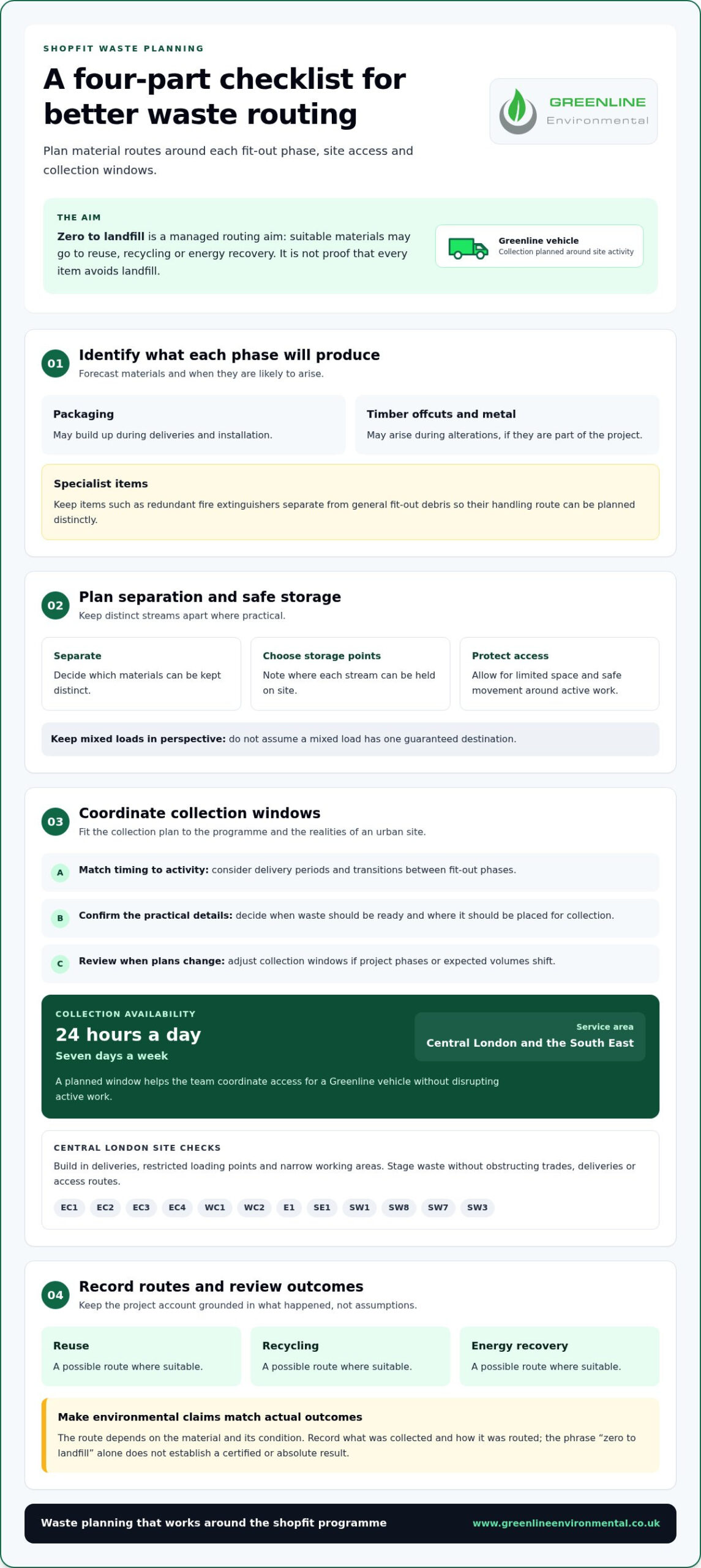
Make waste planning part of the project programme, not a task left until the site is crowded. Planning early can make reuse and recycling routes easier to coordinate. For zero to landfill business waste disposal, use a short working sequence and revisit it as the fit-out moves between phases:
- Identify materials: Forecast what each work stage is likely to produce and note when it will arise.
- Plan separation: Decide where distinct materials can be kept apart, taking account of available space and safe access around active work.
- Coordinate collections: Set collection windows against the programme, site access and expected volumes. Review them if phases change.
- Review routes: Record how collected materials are routed so the project’s environmental account reflects outcomes, not assumptions.
In Central London, a delivery, restricted loading point or narrow working area can affect where waste is held and when it can leave. Build those constraints into the plan early. On sites in EC1, EC2, EC3, EC4, WC1, WC2, E1, SE1, SW1, SW8, SW7 and SW3, consider where waste can be staged without obstructing trades, deliveries or access routes. Update the arrangement when work sequences shift.
How can collections fit around tight shopfitting schedules?
Set collection windows around site activity, such as delivery periods or transitions between fit-out phases. Confirm when waste needs to be ready and where it should be placed for collection. Greenline’s commercial service operates 24 hours a day, seven days a week, giving shopfitters options beyond standard working hours. A planned window helps the team coordinate access for a Greenline vehicle without disrupting active work.
For a collection plan shaped around your project schedule, request a tailored quote. Greenline also provides construction waste removal and site clearances for projects that need more than routine collections.
How Greenline supports business waste disposal beyond landfill in London
For shopfitters, waste management needs to work alongside the physical demands of the project. Greenline provides commercial waste removal across Central London and the South East, coordinating collections for busy sites where access, space and programme changes all affect logistics. Its services operate 24 hours a day, seven days a week, giving project teams flexibility as work progresses.
Greenline works with local disposal partners focused on reuse, recycling and energy recovery where suitable. The route depends on the material and its condition. That is why zero to landfill business waste disposal should be treated as managed routing, not a promise that every waste stream will avoid landfill. Record what is collected and how it is routed, and make environmental claims that reflect actual outcomes.
What happens when a project includes specialist or construction waste?
Different materials may need distinct handling routes, so keep specialist items identifiable rather than combining them with general fit-out waste. For example, if redundant fire extinguishers arise during a project, separate them from ordinary construction debris. The fire extinguisher disposal information covers that specific waste stream. Separating items when they arise helps keep collection and onward handling organised.
For wider project collections, Greenline can coordinate commercial waste removal around the practical constraints of an urban site. Share the waste types, expected volumes and project schedule when you request a quote for your shopfit.
Set your next shopfit up for better waste control
Your next project is an opportunity to build waste handling into the programme from the outset. Assign responsibility for each waste stream and review the plan when the work sequence changes. This gives your team a practical basis for coordinating collections and comparing intended routes with what happened on site.
Use zero to landfill business waste disposal as a considered project aim, not an absolute claim detached from the materials and their actual destinations. A plan shaped around site constraints and working hours can support responsible waste management while keeping the fit-out’s day-to-day demands in view.
Planning an upcoming shopfit? Request a quote for your business waste requirements and arrange a collection plan around your project.
Frequently Asked Questions
What does zero to landfill mean for a business?
For a business, it describes an effort to divert waste from landfill, but a broad claim can hide differences between materials and their actual destinations. Make environmental statements specific to the waste streams and outcomes they cover. For example, distinguish items reused or recycled from material sent for energy recovery, rather than implying all waste followed the same route.
Can a shopfitting project achieve zero waste to landfill?
A shopfit can aim to keep suitable materials out of landfill, but whether every waste stream avoids it depends on the materials produced and the routes available. Treat the goal as project-specific, not an automatic result. For zero to landfill business waste disposal, record what leaves the site and describe the outcome accurately, including any material that does not avoid landfill.
How can London shopfitters manage waste collections outside normal working hours?
Plan a collection window around site access, trading activity and work shifts, then brief the team on when waste must be ready. In areas such as EC1 and SE1, consider how a Greenline vehicle can reach the site without blocking active work or deliveries. Align the collection plan with the project schedule and update it if access or phases change.
Does zero to landfill mean all business waste is recycled?
No. Recycling is one possible route, but suitable waste may instead be reused or sent for energy recovery, and some material may still go to landfill. A landfill-diversion claim does not mean every item has been recycled. For a clearer account, record the outcomes separately and avoid presenting a diversion aim as proof of a universal result.