
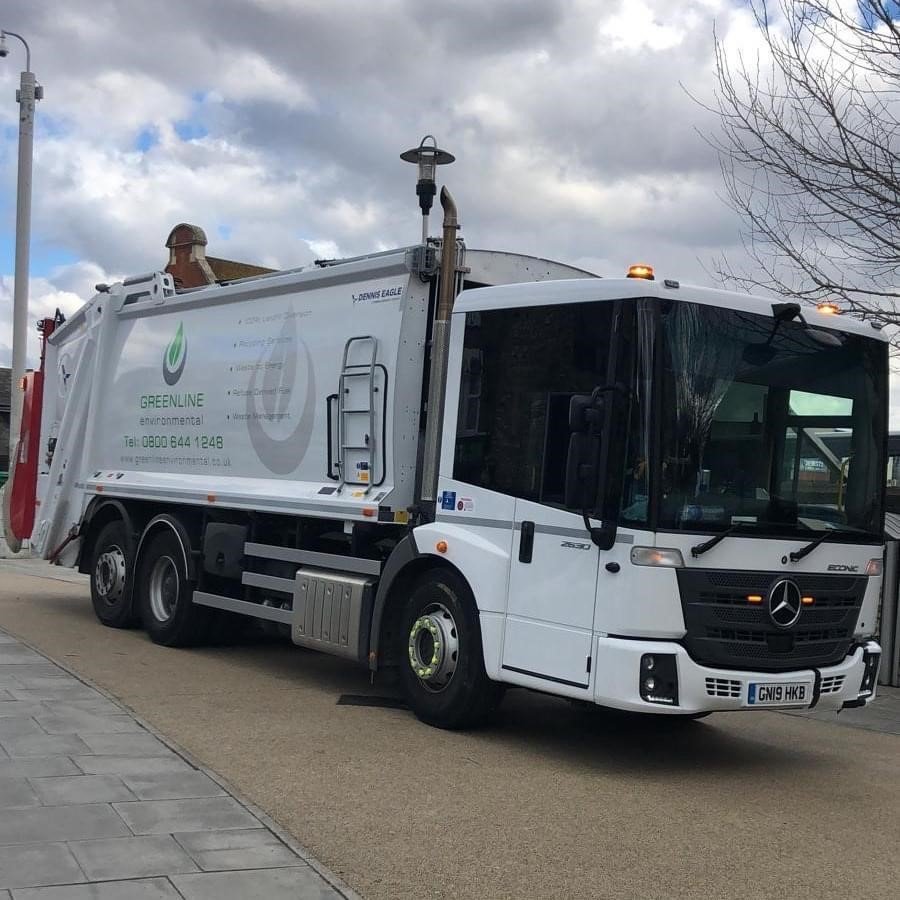
What if the biggest clearance-day delay has nothing to do with the size of the office, but with decisions left until the collection team arrives? Sorting contents, protecting confidential information and arranging building access all need attention beforehand. In Central London, a loading bay, service lift or restricted parking arrangement can affect the schedule, so early coordination matters.
Use this practical preparing for an office clearance checklist to give your team a clear sequence before collection day. You’ll see how to decide what stays, what can be reused or recycled, and what needs confidential shredding or careful handling as data-bearing equipment. The checklist also covers access, loading and lift arrangements, then the final checks for an orderly handover of the premises. With decisions recorded and responsibilities clear, Greenline Environmental can carry out your office clearance with fewer avoidable hold-ups and support appropriate reuse, recycling and recovery routes for items leaving the site.
Key Takeaways
- Set the clearance scope first, then assign clear responsibilities so decisions don’t stall on collection day.
- Use a preparing for an office clearance checklist to work through each area and identify what will stay, move, be reused or leave the premises.
- Plan building access in advance by mapping the route to the loading point and arranging lift and loading access with the building contact.
- Prepare staff and the site for clearance day, then finish with a walkthrough to confirm the premises are ready for handover.
- Share the scope, access details, item categories and preferred timing when arranging your London office clearance.
Preparing for an Office Clearance: Set the Scope and Assign Responsibilities
Appoint one project lead to keep decisions moving, then name contacts for facilities, IT, HR and building management. Facilities can coordinate access and site arrangements; IT can identify equipment requiring secure handling; HR can manage staff communications. Greenline Environmental’s office clearance service can support businesses planning a London premises clearance, with items directed towards appropriate reuse, recycling or recovery routes.
Build a clearance plan the whole team can follow
Create one shared tracker rather than relying on separate emails or informal conversations. Record the areas included, key dates, decision-makers and anything that must stay, such as shared equipment, leased furniture or records awaiting review. Assign an owner to each task, including staff updates, equipment checks, building access and final sign-off.
Use clear status labels, such as “to decide”, “approved to clear” and “must remain”. This gives colleagues a consistent way to flag uncertainty before collection day. It also helps the project lead identify unresolved decisions early, rather than leaving them to interrupt the clearance.
Set a realistic London office-clearance timeline
Work backwards from the confirmed handover date. First, set the latest point for the final walkthrough; then schedule clearance, internal sorting and staff notices in reverse order. Build in enough time for decisions about furniture and equipment, coordination with building management, and any separate handling arrangements for confidential paperwork or specialist waste streams.
There’s no single timeline that fits every office. A partial reset may involve fewer areas than a lease-end clearance, while a busy Central London building may require more coordination around permitted access, lifts and loading. Ask the project lead to review progress regularly and adjust task dates when building arrangements or internal decisions change.
A defined scope also clarifies how cleared items enter the wider waste management process, from collection and transport to reuse, recovery or disposal. For broader planning guidance, consult Office Clearance London: The Complete Business Guide for 2026 alongside this checklist.
Sort Office Contents Before Clearance: Reuse, Confidential Waste and Equipment
Separate confidential documents and data-bearing equipment
For documents marked for destruction, arrange confidential waste shredding as a distinct stream. GOV.UK explains the legal duty of care for business waste, including the importance of managing commercial waste responsibly. Keep the paperwork and electronic equipment identified separately so neither is accidentally treated as general clearance material.
Choose what stays, moves, gets reused or leaves
When the inventory is ready, it can help shape an office clearance in London around the contents and their intended routes. If you’re organising a clearance, you can also request a tailored quote using your item list and sorting decisions.
Plan London Building Access, Loading and the Right Clearance Approach
In a London commercial building, a well-sorted clearance can still lose time if the collection route or loading arrangements are unclear. Contact the building manager or facilities team early to establish permitted access, loading points, lift arrangements and any time restrictions. Ask about vehicle access and parking constraints too, including restrictions on nearby roads that could affect where a Greenline vehicle can stop.
Add the answers to your preparing for an office clearance checklist. A practical site brief should include the full address, the building contact’s name and number, access instructions, agreed loading arrangements, preferred timing and any items needing special handling. Share it with the people coordinating the clearance so everyone works from the same information.
Check the route from office floor to collection vehicle
Walk the route from each clearance area to the loading point. Note narrow doorways, tight turns, stairs, corridor pinch points, lift dimensions and any access controls. Where measurements could affect the movement of bulky furniture or equipment, record them rather than relying on a general description. Identify who will provide access and where the site contact will meet the clearance team. Written, building-specific instructions help avoid last-minute calls and confusion.
Match the clearance plan to the building and schedule
The suitable approach depends on the volume and type of items, access to the premises, loading conditions and timing. A planned office clearance may suit a wider set of rooms or a coordinated handover, whilst wait-and-load waste removal may be worth considering for a suitable urban collection where loading access and timing are clearly arranged. Set the approach around the site, not a generic assumption.
Before confirming the plan, compare the inventory with the route and the building’s arrangements. A large desk may need a different exit route from boxed files; electrical equipment may require separate handling. If the loading point is shared or access is time-limited, record who controls entry and how the team will be directed on arrival.
Keep the site brief concise and easy to use. Include any agreed access window, lift or loading instructions, contact details, route notes and special-handling items. Circulate it to the project lead, building contact and relevant staff before clearance day. That way, the collection team can work to a coordinated plan, and your office team can focus on keeping the premises safe and ready for handover.
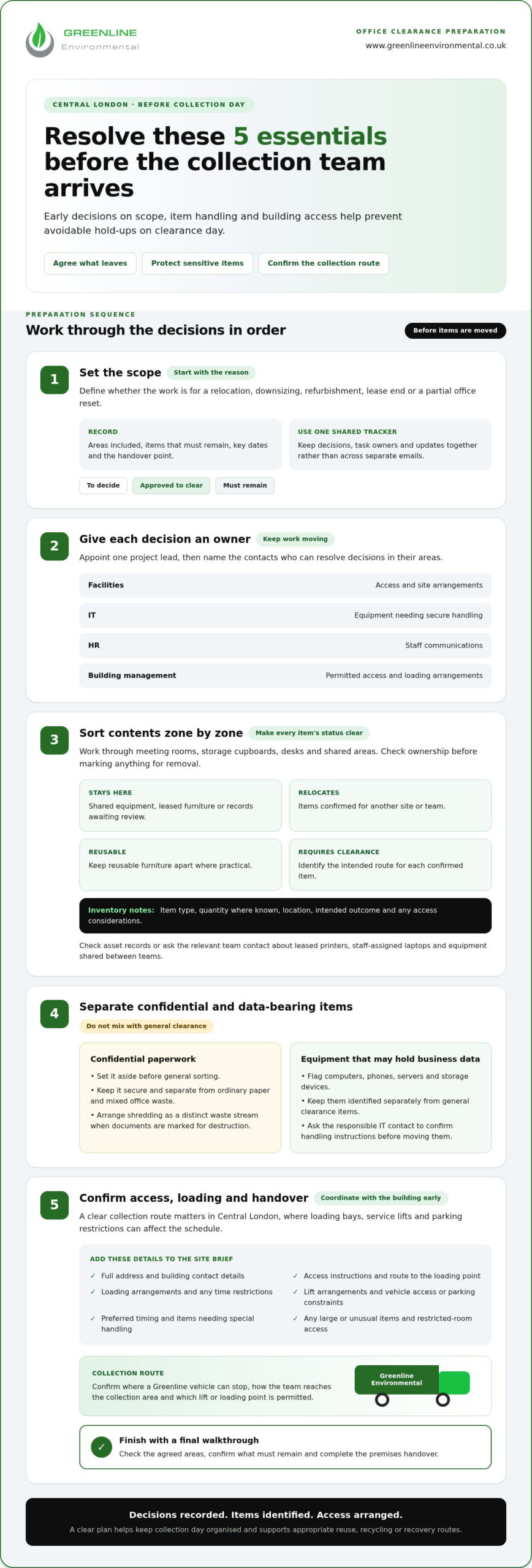
Office Clearance Day Checklist: Prepare Staff, Site and Handover
On clearance day, a clear sequence helps staff, the site contact and clearance team work from the same plan. Use the schedule and labels agreed in your preparing for an office clearance checklist, and keep one named person available to resolve questions. Small uncertainties can otherwise interrupt work or lead to an item being moved in error.
Brief staff and prepare the site contact
Before work begins, remind affected teams which areas are closing and when. Share the sorting labels, access plan and escalation contact, and clearly mark anything that must remain. Ask staff to remove personal belongings and move retained items away from clearance zones. Keep agreed routes and loading areas clear so items can be moved safely and efficiently.
The site contact should know the day’s arrangements and remain available to answer questions about access, rooms or uncertain items. If a decision cannot be resolved promptly, pause that item and refer it to the project lead rather than treating it as cleared.
Follow the day in sequence
- Before the team arrives: Confirm site access, make sure the named contact is present and check that agreed routes and loading areas are unobstructed.
- At the start: Review the clearance scope, identify areas that must remain untouched and point out items requiring special handling.
- During the clearance: Keep staff clear of active work areas, respond to queries through the site contact and record any agreed changes or exceptions.
- As areas are completed: Mark them on the room list or tracker so the project lead can see what has been cleared and what still needs attention.
Complete a final walkthrough and close-out
Once the clearance work is complete, walk through every agreed room, cupboard and shared area against the scope. Check that retained items are still in place and note any items left by agreement, access issues or areas that could not be completed. Record actions that remain outstanding, with an owner for each one.
Use a simple sign-off sequence: the site contact checks the areas, the project lead reviews exceptions and completion notes, then the authorised person confirms the premises are ready for handover. Keep the record with the project documents, and only release keys or hand over the space once the agreed checks are complete.
For a coordinated office clearance, request a quote for your London office clearance and share the scope, access arrangements and preferred timing.
After the Checklist: Arrange a Responsible Office Clearance in London
Your checklist is most useful when it becomes a clear brief for the clearance. Bring together the scope, item inventory, access plan, building arrangements, site contact and preferred timing. Note which rooms are included and what must remain, so the plan reflects the actual handover rather than a general description of the premises.
Turn checklist notes into a clear clearance brief
Make distinct notes for confidential documents, data-bearing equipment, bulky furniture and any items needing special handling. Include relevant quantities or locations where known, along with lift, loading and access details. This helps the clearance team understand the work involved and supports planning for suitable routes for items, including reuse, recycling and recovery.
Greenline Environmental provides office clearance in London, supporting businesses as they prepare commercial premises for handover. Its local disposal partners focus on diverting waste from landfill through reuse, recycling and energy recovery. The appropriate route depends on the items and their condition, so avoid assuming every item will follow the same path.
For a broader view of the process, use this checklist alongside the London office clearance guide for 2026. Together, they can help connect practical preparation with the decisions involved in arranging a responsible clearance.
Request a quote with the essential project details
When you’re ready to discuss the work, share the site location, clearance scope, access and loading notes, item categories and preferred timing. Mention any building restrictions and identify the person who will coordinate on site. A concise brief makes it easier to understand the project and plan around its requirements.
Greenline’s services are available 24 hours a day, seven days a week. This describes service availability, not a guarantee of a particular collection slot, so include your preferred timing when outlining the job. With the key details assembled, request a quote for your office clearance and move towards an organised premises handover.
Put Your Office Clearance Plan into Action
A smooth handover starts with decisions made before collection day. Set the scope, give each task an owner and keep one shared record of what stays, moves, can be reused or needs careful handling. Then make sure the building access plan and staff instructions are clear. A preparing for an office clearance checklist helps bring those details together and reduce avoidable uncertainty.
Greenline Environmental provides office clearance across Central London and the South East, with services available 24 hours a day, seven days a week. Its local disposal partners focus on reuse, recycling and energy recovery, helping businesses consider responsible routes for items leaving their premises.
Share your clearance scope, site location, access arrangements and preferred timing to help shape the project around your premises and handover needs. Request a quote for your office clearance and take the next step towards an organised, well-managed handover.
Frequently Asked Questions
What should I do first when preparing for an office clearance?
Start by defining the clearance scope and appointing a project lead. Confirm whether the work involves a relocation, downsizing, refurbishment, lease end or partial reset, then identify the rooms and items included. Create a shared record of what will stay, move, be reused or leave, and assign owners for staff updates, IT checks and building arrangements. This gives your team a clear starting point before sorting begins.
How far in advance should I prepare for an office clearance?
Work backwards from the confirmed handover date rather than relying on one timeline for every office. Allow time for staff decisions, sorting, building coordination and planning for items such as confidential paperwork or electrical equipment. A partial clearance may need a different schedule from a full lease-end clearance. If access arrangements or internal decisions are still unresolved, include time to settle them before collection day.
How do I prepare confidential documents and office IT for clearance?
Separate confidential paperwork from ordinary office materials and keep it clearly identified until its handling is arranged. Ask your IT contact to identify computers, phones, storage devices and other equipment that could retain business data, and follow your organisation’s process before those items leave the premises. Record which items need special handling. Greenline Environmental also provides confidential waste shredding for business documents.
What should I check about access before an office clearance in London?
Ask the building contact about access times, loading arrangements, service lifts, entry procedures and any restrictions on where a collection vehicle can stop. Walk the route from each clearance area to the loading point, noting narrow corridors, stairs, tight turns or lift constraints. These checks matter across central London locations such as EC1, EC2, EC3, EC4, WC1, WC2, E1, SE1, SW1, SW8, SW7 and SW3.
Can office furniture and equipment be separated for reuse or recycling?
Yes. Sort furniture and equipment by intended outcome, marking what stays, relocates, may be reused or requires clearance. Keep reusable items separate from general waste where practical, and identify electrical equipment as its own category. Greenline Environmental’s local disposal partners focus on reuse, recycling and energy recovery, although the appropriate route depends on the items. A simple inventory helps communicate what is being cleared and how it has been classified.
Do I need to tell building management about an office clearance?
Tell the building contact or facilities team early so you can coordinate access, loading, lift use and any site-specific arrangements. Ask who will provide entry and whether staff need to follow particular procedures on the day. Record the agreed details in the clearance brief and share them with the project lead and site contact. Advance coordination can help prevent avoidable access confusion during the collection.
What should the site contact have ready on clearance day?
The site contact should have the agreed scope, room list, sorting labels, access instructions and the project lead’s contact details. They should know which items must remain and which need special handling, and be ready to answer questions about rooms or access. Keep routes and loading areas clear. During the work, record completed areas, exceptions and outstanding actions so the project lead can review them before handover.