
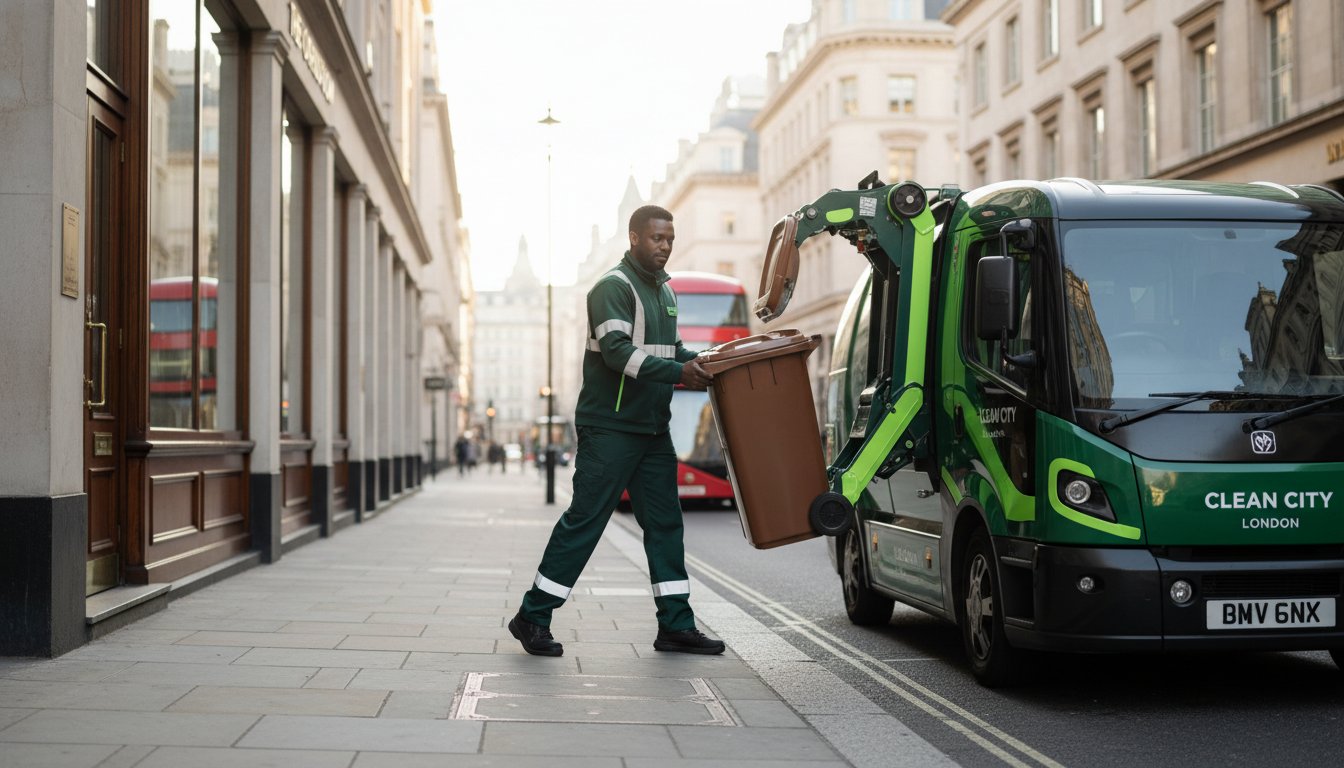
Would your business be prepared to pay £118 per hour for an Environment Agency inspection simply because your bin segregation failed a spot check? It’s no secret that managing restaurant waste collection London is a logistical headache. You’re likely already struggling with narrow council collection windows, limited pavement space for bulky bins, and the constant battle against urban hygiene concerns. It’s a high-stakes environment where a single oversight can lead to a £300 fixed penalty notice or even prosecution.
This guide will help you master the complexities of the 2026 Simpler Recycling mandates. You’ll learn how to streamline your collections whilst significantly reducing your environmental footprint and avoiding those steep £5,000 fines for persistent non-compliance. We’ll examine the specific 2026 regulatory timeline, explore how to optimise your waste segregation to lower landfill tax costs, and provide a clear roadmap for maintaining a clean, compliant, and sustainable London business.
Key Takeaways
- Understand the 2026 “Simpler Recycling” mandates and how these legal requirements affect your business’s Duty of Care obligations.
- Navigate the specific logistical hurdles of restaurant waste collection London, including strict council collection windows and Red Route access restrictions.
- Learn how the Anaerobic Digestion process converts your kitchen waste into renewable energy at specialist UK processing facilities.
- Identify practical methods for designing kitchen workflows that prevent contamination and maintain high hygiene standards in busy urban environments.
- Discover how professional waste management expertise helps you maintain a compliant, sustainable reputation whilst managing central London’s complex logistics.
Understanding the 2026 Mandates for Waste Management Services
The legislative landscape for London hospitality has shifted permanently. The 2026 enforcement of the Environment Act 2021 marks a transition from simple guidance to strict regulatory oversight. Businesses with 10 or more employees have been required to separate food waste since March 2025, but the focus has now moved to rigorous inspection. If your restaurant waste collection London isn’t compliant, the financial consequences are immediate. The Environment Agency now charges £118 per hour for regulatory work related to non-compliance. It’s an expensive penalty for an avoidable error.
London councils are under pressure to meet Net Zero targets. Consequently, they’ve increased the frequency of bin inspections across all boroughs. Contaminated recycling bins are frequently being left on the kerbside, and persistent offenders face fixed penalty notices of £300. In extreme cases, prosecution can lead to fines of up to £5,000. Maintaining a clear paper trail is your best defence. You must ensure every collection is backed by an accurate Waste Transfer Note (WTN) that proves your waste was handled by a licensed carrier. This documentation is the only way to satisfy the “Simpler Recycling” reforms that aim to standardise waste handling across England.
The Legal Definition of Commercial Food Waste
Commercial food waste is legally classified as any biodegradable material produced from the processing, preparation, or consumption of food within a business premises, including plate scrapings and out-of-date stock. This includes everything from vegetable peelings in the prep kitchen to liquid fats and expired inventory. Your Duty of Care requires you to ensure these materials never enter the general waste stream. Accurate documentation isn’t just a suggestion; it’s a legal necessity that protects your business reputation during a council audit. Every gram of food must be accounted for from the moment it leaves your kitchen.
Why Landfill is No Longer an Option for London Firms
Sending organic waste to landfill is a logistical and financial failure in 2026. The UK landfill tax has climbed to £126.15 per tonne as of April 2025, making general waste bins significantly more expensive than segregated recycling. Beyond the cost, food waste in landfill decomposes to produce methane, a greenhouse gas far more potent than carbon dioxide. The capital is shifting toward a circular economy where food waste is redirected to anaerobic digestion facilities. This process transforms your kitchen scraps into renewable energy and biofertilisers. It turns a messy liability into a sustainable resource that powers the city’s infrastructure.
How London’s Food Waste is Transformed: The AD Process
When we handle your organic matter, it doesn’t simply disappear into a landfill. In 2026, the primary destination for restaurant waste collection London is a specialist anaerobic digestion (AD) facility. Unlike traditional composting, AD takes place within sealed, oxygen-free tanks. This contained method is particularly suited to the capital’s dense urban environment because it effectively manages odours and captures 100 percent of the methane produced during decomposition. To better understand how these systems scale across the capital, London’s commercial food waste recycling toolkit provides a comprehensive look at the infrastructure supporting this vital shift.
The journey from your kitchen to energy production is a precise logistical operation. Once collected, your waste is transported to facilities like the East London Biogas plant in Dagenham, which has the capacity to process up to 70,000 tonnes of food waste annually. By utilising these local processing hubs, we significantly reduce the carbon footprint associated with long-haul waste transport. The efficiency of restaurant waste collection London relies on this proximity, ensuring that your business supports the local circular economy whilst meeting its environmental obligations.
Anaerobic Digestion vs. In-Vessel Composting
AD is the superior choice for high-volume commercial hospitality waste. Whilst in-vessel composting is a valid method for green waste, AD is far more efficient at processing the high-fat and high-protein content typical of restaurant leftovers. This process supports the UK’s national grid by injecting biomethane directly into the gas network. After the energy has been extracted, the remaining organic material, known as digestate, is used as a high-grade bio-fertiliser for British farms. This creates a closed-loop system where your kitchen scraps eventually help grow the next season’s produce.
Energy Recovery and Environmental Stewardship
The environmental impact of this process is substantial. Recycling one tonne of food waste can prevent approximately 0.5 tonnes of CO2 equivalent from being released into the atmosphere compared to landfill disposal. This data is essential for firms aiming to hit Net Zero targets or improve their ESG reporting. Greenline Environmental carefully selects processing partners who prioritise maximum energy recovery and resource efficiency. If you’re looking to upgrade your current setup, our bin hire solutions can help you implement a more effective segregation system today. This transition ensures your business isn’t just following the law but actively contributing to the UK’s renewable energy security.
Navigating London Logistics for Efficient Waste Collection
London’s geography presents unique challenges for any waste strategy. Council time windows are non-negotiable; if you leave bags or bins on the kerbside outside of the designated 30-minute slots, you risk an immediate fixed penalty notice. This is why restaurant waste collection London requires a partner who understands the granular detail of borough-specific bylaws. Red Routes and double red lines further complicate matters; waste vehicles must operate with surgical precision to avoid blocking traffic or incurring heavy fines from Transport for London (TfL).
For many central establishments, traditional skip hire is physically impossible due to permit restrictions and a lack of kerbside space. Our Wait and Load service offers a superior alternative. It eliminates the need for highway permits and ensures your waste is removed immediately. This prevents the build-up of unsightly rubbish that attracts pests and creates odour issues in dense urban areas like Soho or Covent Garden. Tailoring your collection frequency is a practical necessity that protects your hygiene ratings and your relationship with neighbouring businesses.
Choosing the Right Bin Size for Limited Urban Space
Space is at a premium in historic London basements. We often recommend 120L or 240L food waste wheelie bins for establishments with restricted footprints. These smaller units are easier to manoeuvre through narrow service corridors and fit into standard goods lifts. Using high-quality biodegradable liners is a simple but effective way to maintain hygiene and reduce the frequency of professional bin cleaning. If you’re unsure which capacity suits your volume, you can explore our full range of Bin Hire London options to find a bespoke fit for your site.
Overcoming Access Constraints in Central London
Navigating the narrow streets of the City requires a nimble, compliant fleet. All vehicles must meet Ultra Low Emission Zone (ULEZ) standards to avoid daily charges that would otherwise inflate your service costs. Reliable restaurant waste collection London often depends on out-of-hours coordination. By scheduling collections during the early hours, we minimise disruption to your patrons and bypass the worst of the capital’s congestion. This 24/7 logistical capability is essential for West End businesses that operate around the clock and cannot afford for waste to linger during peak trading hours.
Best Practices for Segregating Food Waste in Kitchens
Efficiency in restaurant waste collection London depends on the discipline of your kitchen team. Segregation shouldn’t be a secondary thought; it must be baked into your daily workflow. We advise placing dedicated food caddies at every prep station and the pot-wash area. This setup minimises the distance staff must travel to dispose of organic matter, reducing the risk of cross-contamination. Using clear, visual signage alongside colour-coded bins ensures that even during the most frantic service periods, the correct disposal choice is the easiest one to make.
Education is the foundation of a compliant kitchen. Your staff need to understand that their precision directly impacts the business’s legal standing under the 2026 mandates. When a team knows their prep waste is destined for energy recovery, they’re more likely to take care with every scrap. It’s a shift in mindset that transforms a mundane task into an act of civic duty. Training should be regular and part of the induction process for every new hire.
Reducing Contamination at the Source
Rejected collections due to contamination are an expensive mistake. A single plastic bottle or a stray piece of foil can compromise an entire bin, leading to its reclassification as general waste. A single plastic bottle in a food recycling bin can turn a valuable resource into a contaminated load destined for landfill. Regular waste audits are the most effective way to maintain high standards. By inspecting your bins before collection, you can identify patterns of error and address them through targeted training. This proactive approach ensures you’re always ready for a spot check from the Environment Agency.
Hygiene and Odour Management
Managing organic waste in central London requires a focus on cleanliness. Food bins must be washed out regularly with hot water and sanitiser to prevent bacteria growth. This is particularly important in the summer months when heat can accelerate odours. Choosing the right location for your external storage is critical; bins should be kept in shaded, accessible areas away from customer entrances. Reliable, frequent collections prevent the build-up of waste that attracts pests to London’s narrow backstreets. This keeps your premises hygienic and your reputation intact amongst neighbours and diners alike.
Why Greenline Environmental is London’s Trusted Waste Partner
Selecting a partner for restaurant waste collection London isn’t just about finding a truck; it’s about securing a guardian for your business reputation. We understand that the capital never sleeps. While national providers often struggle with the rigid constraints of Red Routes and the Congestion Charge, our local expertise allows us to navigate these hurdles with surgical precision. We operate as a silent professional in the background, ensuring your back-of-house operations remain orderly and compliant without interrupting your front-of-house service.
Our commitment to environmental stewardship is reflected in our choice of disposal partners. We don’t just move waste; we manage a resource. By directing organic matter to local anaerobic digestion (AD) facilities, we help you close the loop on your carbon footprint. Every collection is backed by transparent Duty of Care documentation, giving you the certainty that your waste is being processed ethically and legally. This methodical approach replaces the stress of potential inspections with a sense of orderly control.
The Benefit of a 24/7 London Service
London’s hospitality economy operates around the clock, and your waste management should do the same. Night-time collections are often a logistical necessity in areas where daytime traffic makes kerbside access impossible. This service is particularly vital for large-scale venues; you can find more details on our bespoke Event Waste Management London solutions. Beyond scheduled pickups, we provide a rapid response for unexpected issues like fly-tipping clearance or surges in waste after a busy weekend. This flexibility ensures your premises stay clean and accessible, regardless of the city’s unpredictable pace.
Your Partner in Environmental Compliance
Managing the paperwork for the 2026 mandates shouldn’t be a burden on your management team. We simplify the entire process by providing digital Waste Transfer Notes and clear reporting that satisfies council inspectors and Environment Agency audits. Our zero-to-landfill objective provides the peace of mind that your business is contributing to the UK’s Net Zero targets rather than adding to the methane problem. When you partner with us, you aren’t just hiring a contractor; you’re gaining an ally dedicated to your long-term sustainability. Enquire about our London food waste collections today to see how we can streamline your restaurant waste collection London and safeguard your compliance.
Future-Proof Your London Waste Strategy
The 2026 mandates have transformed food waste from a back-of-house afterthought into a critical compliance priority. By implementing the segregation best practices and logistical strategies discussed, you ensure your establishment remains resilient against rising landfill taxes and strict Environment Agency enforcement. It’s a transition that requires precision, but it ultimately secures your business’s reputation as a responsible urban operator.
Managing restaurant waste collection London doesn’t have to be a source of constant pressure. Greenline Environmental acts as your silent professional partner, providing 24/7 service across all boroughs and a firm zero-to-landfill commitment through our local Anaerobic Digestion facilities. Our expertise in Wait and Load collections is specifically designed for restricted central areas where pavement space is at a premium and permits are difficult to obtain.
Take the first step toward a more efficient, compliant future today. Get a Quote for Your London Food Waste Collection and let us handle the complexities of the capital’s logistics whilst you focus on delivering an exceptional dining experience. We’re ready to help you build a cleaner, more sustainable business.
Frequently Asked Questions
Is commercial food waste collection mandatory in London in 2026?
Yes, separate food waste collection is a legal requirement for all non-domestic premises in England with 10 or more full-time equivalent employees as of March 31, 2025. These regulations are part of the “Simpler Recycling” reforms. Micro-businesses with fewer than 10 employees have a slightly longer transition period but must comply by March 31, 2027. Failure to segregate organic waste can lead to compliance notices and significant financial penalties.
What happens to the food waste after it is collected in London?
Most organic waste collected in the capital is transported to specialist anaerobic digestion facilities. In these oxygen-free environments, bacteria break down the food scraps to produce biomethane gas and a nutrient-rich digestate. The gas is typically injected into the national grid or used to generate renewable electricity. The remaining digestate serves as a high-grade bio-fertiliser for UK agriculture, completing a sustainable circular economy loop.
How often should my London restaurant have its food waste collected?
Collection frequency depends on your volume of covers and available storage space, but most London restaurants require at least three collections per week. Daily collections are often necessary for high-volume establishments in dense urban areas like Soho to prevent odour issues and pest infestations. A consistent schedule ensures that organic matter doesn’t linger on-site, helping you maintain high hygiene standards and positive relationships with neighbouring businesses.
Can I include compostable packaging in my commercial food waste bin?
You should generally avoid placing compostable packaging in your food waste bin unless your processing facility specifically allows it. Many anaerobic digestion plants are designed to process organic food matter and may struggle to break down certain bioplastics or heavy cardboards within their operational cycles. These items are often treated as contaminants that can lead to rejected loads. Always check with your waste partner before introducing new materials to your segregation stream.
What is the most cost-effective way to manage food waste in a London restaurant?
The most effective way to reduce costs is through rigorous segregation at the source to avoid high landfill tax rates. As of April 2025, the standard rate for landfill tax is £126.15 per tonne, making general waste significantly more expensive than separated food recycling. By training staff to eliminate contaminants, you ensure your restaurant waste collection London remains efficient and avoid the £118 per hour charges for Environment Agency non-compliance inspections.
How do I ensure my business is compliant with UK waste Duty of Care regulations?
Compliance requires you to verify that your waste is handled by a licensed carrier and that you maintain accurate documentation for every collection. You must keep a Waste Transfer Note for every load that leaves your premises, detailing the type of waste, the quantity, and the destination. These records must be retained for at least two years. This paper trail is your primary defence during local authority audits or Environment Agency spot checks.
What size food waste bins are available for London businesses with limited space?
Businesses with limited storage space typically utilise 120-litre or 240-litre wheeled bins, which are compact enough to fit through standard doorways and goods lifts. These smaller units allow for frequent removal without requiring a large external footprint. For establishments in central London with no external storage, our Wait and Load services provide a practical alternative by removing waste immediately without the need for permanent bin placement on the pavement.
Does Greenline Environmental offer 24/7 food waste collections in Central London?
Yes, we provide 24/7 restaurant waste collection London to accommodate the round-the-clock nature of the capital’s hospitality sector. This allows us to perform collections during off-peak hours, avoiding daytime traffic congestion and Red Route restrictions. Our flexible scheduling ensures that your waste is removed at the most convenient time for your operations, minimising disruption to your guests and ensuring your premises remain clean and compliant at all times.