
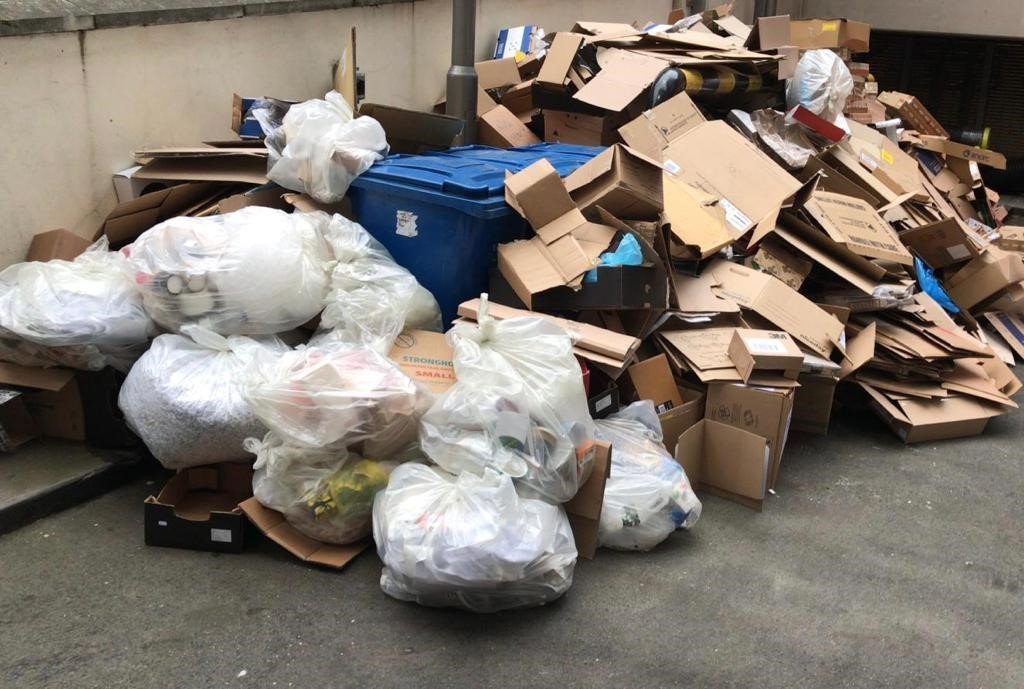
For workplaces, recycling broken office chairs means arranging commercial bulky-waste disposal, not putting them out with regular recycling. Household Waste Recycling Centres don’t typically accept commercial waste, and local rules affect how office furniture can be handled. A chair that can’t be repaired may still be dismantled so recyclable materials, such as metal and plastic, can be separated.
A damaged chair can quickly become an obstacle when it takes up valuable workspace. This guide explains when a chair may be reused, what happens to one that’s beyond repair, and how to manage a workplace clearance responsibly. It also covers why upholstered chairs need careful handling and how commercial waste removal can help organise furniture disposal.
Key Takeaways
- Assess whether a chair is clean, usable and suitable for reuse before arranging disposal; upholstered furniture may need a fire-retardant label for donation.
- For chairs beyond repair, separating metal and plastic parts can help direct recyclable materials into the right streams.
- Keep commercial furniture disposal separate from household recycling, and plan for local facility rules when arranging a workplace clearance.
- When a workplace project leaves bulky waste to remove, Greenline Environmental’s Construction Waste Removal can support the clearance.
Want To Recycle Your Office Chairs?
First, separate chairs suitable for reuse from damaged furniture. For a workplace collection, record the quantity, condition and access details so loading, transport and sorting can be planned.
Assessing Furniture for Reuse or Recycling
Sort chairs by condition: clean, usable furniture may be suitable for donation or resale, while repairable items can be refurbished. Charities may require upholstered chairs to have an up-to-date fire-retardant label. Keep significantly damaged chairs out of the donation group.
For larger collections, record labels, visible damage and chair types before loading. A clearance team can collect and sort furniture, directing suitable items towards reuse and others towards recycling. If transport involves a central warehouse, keep reusable chairs intact and group damaged items separately. This helps protect furniture safely in transit and supports efficient assessment on arrival.
Council Collection and Recycling Centres
UK council recycling centres don’t typically accept commercial waste, and council furniture collections generally serve domestic properties. Some centres accept small amounts of office furniture, but local rules may require a permit or licence. Household centres may also restrict commercial waste and large vans.
Do UK council recycling centres accept office chairs, and do you need to book? Some accept small quantities, subject to local rules, and a permit may be required. Council bulky collections are generally arranged through Gov.uk or the local council, which sets the booking process.
Booking, Arrival Windows and Disposal Costs
When booking, give the council the item type, collection address and access details. Follow its instructions for putting chairs out and keeping routes clear. Collection dates and arrival arrangements are set locally, so plan around the authority’s booking process.
How much does bulky collection or chair disposal cost? Council bulky collections are chargeable, with fees varying by local authority. Commercial disposal costs depend on the volume, access and handling required; request a quote for the service.
Breaking down unrepairable furniture into raw materials
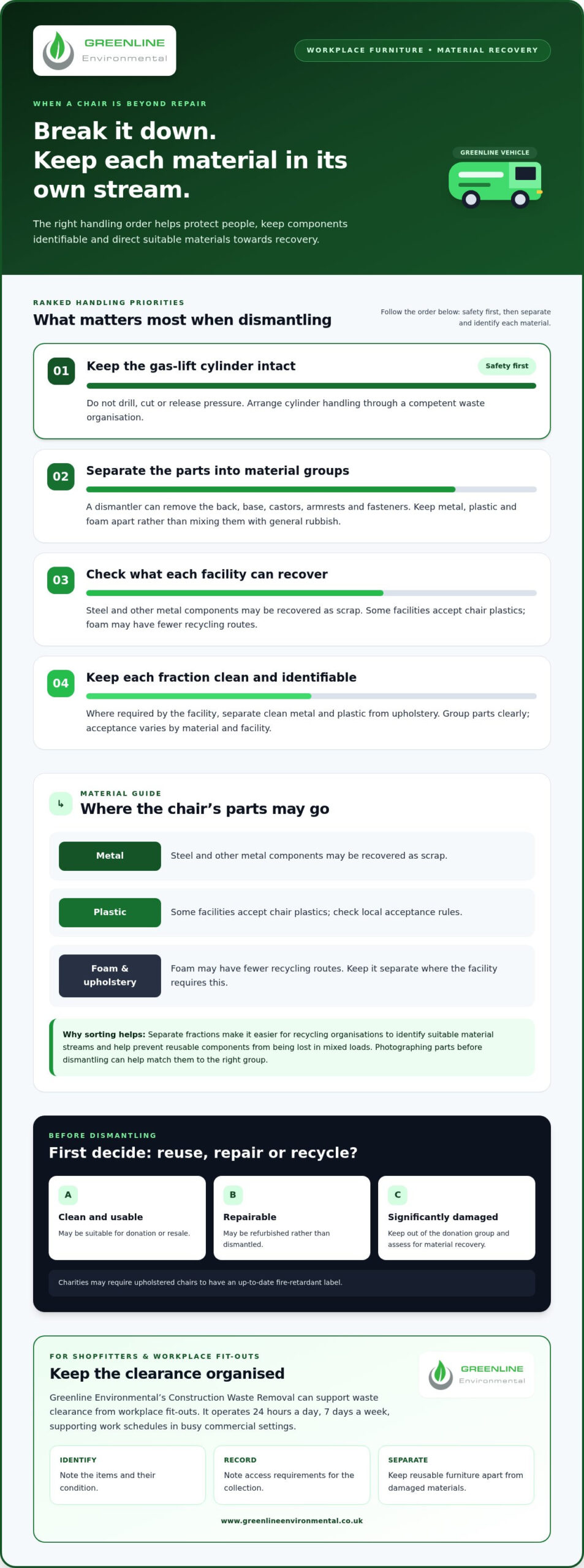
A chair beyond repair may still yield useful materials when dismantled into separate streams. Leave gas-lift cylinders intact: don’t drill, cut or release pressure. Arrange their handling through a competent waste organisation.
Breaking Chairs Down into Raw Materials
Start with the frame and seat. A dismantler can remove the back, base, castors, armrests and fasteners, then separate metal, plastic and foam. Keep each material fraction apart rather than mixing it with general rubbish. Sorting this way helps recycling organisations identify suitable material streams and prevents reusable components from being lost in mixed loads. Photographing parts before dismantling can help match them to the right material group.
Recovering Recyclable Chair Materials
Office chairs often combine materials, so identify what each part contains. Steel and other metal components may be recovered as scrap, while some facilities accept chair plastics. Foam may have fewer recycling routes. Where required by the facility, separate clean metal and plastic from upholstery, and keep components clearly grouped for sorting.
Environmental Benefits of Material Recovery
Recovering materials gives metal and plastics the potential for another use, reducing bulky furniture sent for disposal and supporting demand for recycled feedstock. Frames can be processed as scrap metal, and suitable plastic parts may be repurposed in new products. Foam and mixed materials need separate handling because acceptance varies. The route depends on the material and how cleanly it can be separated, so sorting at the outset helps direct each fraction appropriately instead of treating the whole chair as one waste stream.
Recycling broken office chairs
Yes, broken office chairs can be recycled in the UK, but they can’t go out with regular household recycling. The right route depends on the chair’s materials, local facility rules and whether the waste comes from a business.
Household Waste Recycling Centres don’t typically accept commercial waste. Businesses risk fines of up to £50,000 for taking business waste to one, so arrange a suitable commercial disposal route. Local recycling centres are generally better suited to a couple of furniture items than a large office clearance.
Before disposal, separate reuse from recycling. A clean, usable chair could be offered for sale or donation; charities decide what they can accept. For damaged chairs, check the local centre’s acceptance rules before planning a drop-off. Some facilities accept chair plastics, but foam padding isn’t accepted everywhere.
Keep damaged upholstered chairs whole where possible. Wrap and tape exposed areas to contain foam or fabric during transport, reducing the risk of loose material escaping as the chair is moved and handled.
- Keep business furniture out of household recycling routes.
- Use local facilities for small quantities only when their rules allow.
- Arrange a commercial clearance for larger workplace loads.
Sorting and routing chairs responsibly can divert suitable components from landfill. For a workplace collection, request a quote for office furniture removal.
Greenline Environmental: Construction Waste Removal
Greenline Environmental provides Construction Waste Removal for shopfitters managing waste from workplace fit-outs. If removing broken chairs forms part of a wider site clearance, this service can help organise the waste alongside other construction materials. Greenline’s services operate 24 hours a day, 7 days a week, supporting work schedules in busy commercial settings.
Plan chair removal as part of the wider project: identify the items, note access requirements and keep reusable furniture separate from damaged materials. This helps organise collection around the site’s needs and manage materials appropriately. Construction Waste Removal suits fit-out and building projects, rather than household furniture collection.
For help coordinating waste removal for a shopfitting or workplace project, contact Greenline Environmental.
Make your next workplace clearance count
Plan chair disposal alongside your next office move, fit-out or workspace refresh. A clear inventory helps separate reusable furniture from damaged items and gives the removal team a practical view of access and loading needs. For larger workplace projects, Greenline Environmental offers Office Clearance and Construction Waste Removal. Flexible collection services can suit sites where waste needs clearing as work progresses.
Choosing a suitable route for recycling broken office chairs helps keep workplace waste organised and supports responsible material recovery. List what needs removing and note how the site operates, then arrange collection to suit the project.
Contact Greenline Environmental about your workplace clearance and move forward with a well-organised plan.
Frequently Asked Questions
Can I Just Throw Away My Office Chair?
Don’t put an office chair out with ordinary household recycling. If it’s still usable, consider offering it for reuse; for a broken chair, arrange an appropriate bulky-waste or commercial collection. For example, a business replacing chairs during an office move should keep them on site until the disposal route and collection are organised.
Can I take old office furniture to the tip?
Possibly, but the local centre’s rules and the type of waste matter. Household recycling centres don’t typically accept commercial waste, and some restrict large vans or require advance permits for certain items. Before loading a vehicle, establish whether the furniture comes from a home or workplace and whether the centre accepts that waste.
Is it illegal to dump an old office chair?
Fly-tipping an office chair on public land or private land without permission can lead to a fine of up to £50,000, or imprisonment in serious cases. Leaving a chair beside a communal bin or outside a workplace doesn’t make its disposal authorised. Arrange an approved collection and retain the booking or waste records for your business.
Who collects old office chairs near me?
Businesses in EC1-EC4, WC1-WC2, E1, SE1, SW1, SW3 and SW7-SW8 can arrange commercial furniture removal through Greenline Environmental’s Office Clearance service. This can suit an office move, refurbishment or shopfitting project involving multiple items. Share the site postcode, chair quantity and access details when arranging collection, so the job can be planned appropriately.
Which parts of an office chair can be recycled, such as metal, plastic, fabric and foam?
Metal frames and bases are commonly recovered as scrap, while some local facilities accept chair plastics. Fabric and foam are harder to recycle through standard facilities, and foam acceptance varies by site. Keep materials separate where possible, but don’t assume every component has the same destination. An upholstered seat may need a different route from its metal frame.