
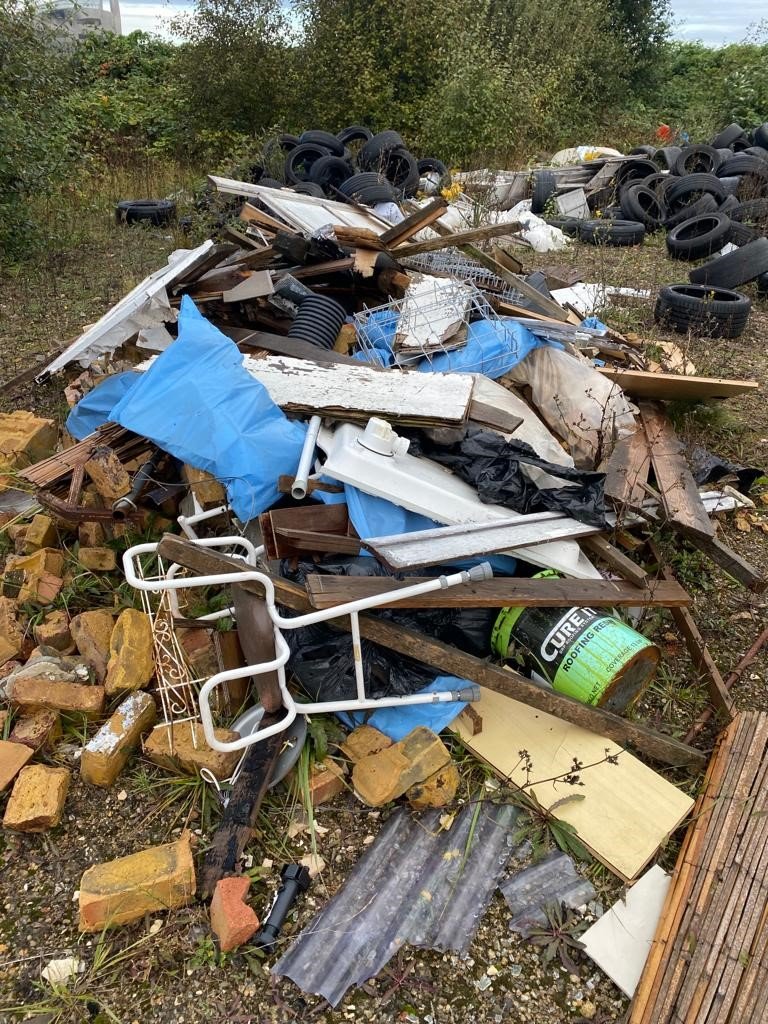
The cost of illegal waste disposal for UK businesses goes beyond the cost of clearing the waste: serious waste-law offences can lead to unlimited fines. A business may face prosecution even if it did not physically dump the waste, if it failed in its duty of care. Landowners or occupiers are generally responsible for paying to remove fly-tipped waste from private land.
It is easy to assume that only the person who dumped the waste is liable. In practice, responsibility also depends on how the waste was handled and whether the business met its legal duties. This article explains who may be held responsible, what the duty of care involves and when waste offences can lead to unlimited fines. It also covers how waste transfer notes help demonstrate compliance and keep commercial waste management organised.
Key Takeaways
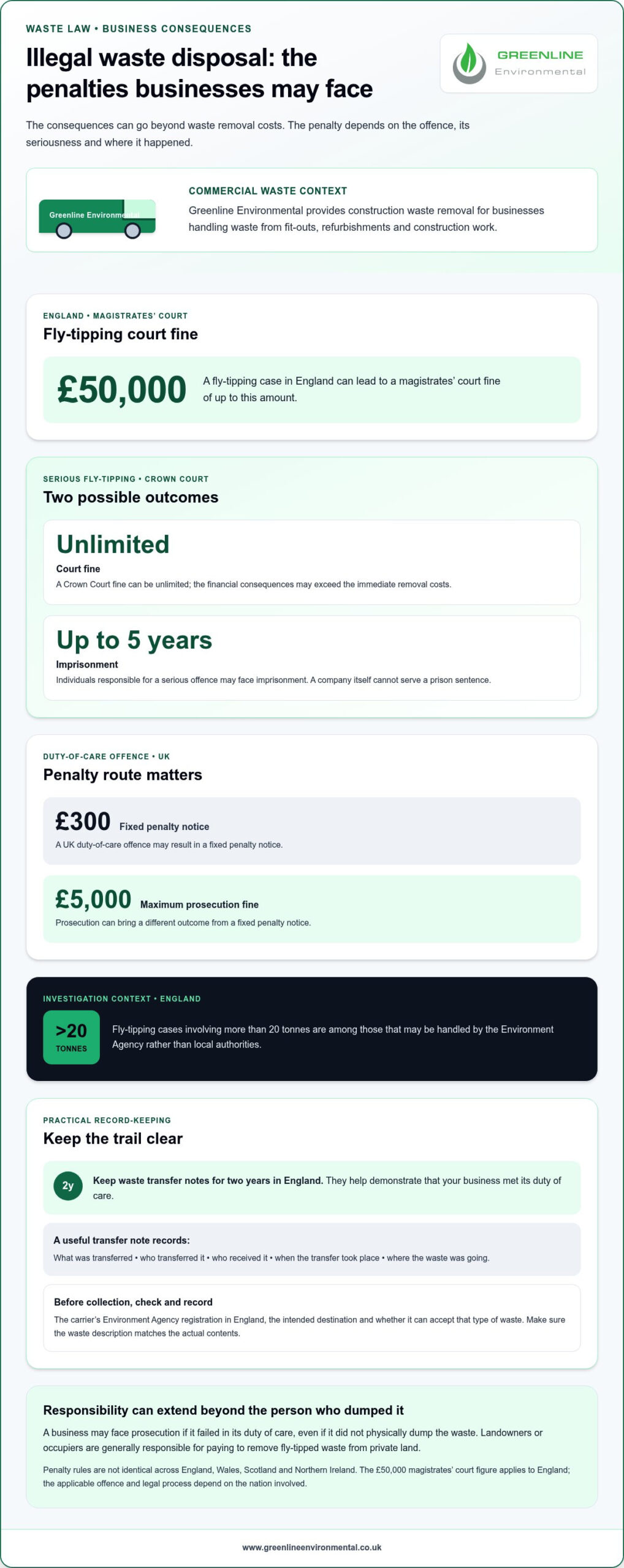
- Keep waste transfer notes for two years in England; according to UK legislation (The National Archives), they help demonstrate that your business met its duty of care.
- Responsibility can extend beyond the person who physically dumped the waste: a business may face prosecution if it failed to meet its duty of care.
- In England and Wales, section 33 of the Environmental Protection Act 1990 makes it an offence to handle controlled waste without an environmental permit or in breach of one, according to UK legislation (The National Archives).
- Serious waste-law violations can bring unlimited fines, so understand the offence and the potential consequences before deciding how to respond.
Business duty of care and waste transfer notes
A business’s duty of care continues after waste leaves its premises. If a carrier disposes of it illegally, the business may face prosecution if it failed to meet that duty. A waste transfer note helps show how the waste passed from the business to another party. In England, businesses must keep these notes for two years, according to UK legislation (The National Archives).
A useful waste transfer note records what was transferred, who transferred it and who received it, as well as when the transfer took place and where the waste was going. Check that the description matches the actual contents. For example, do not describe mixed construction waste as recyclable material if the load includes items that need a different disposal route—reputable contractors such as J Brewer Surfacing & Landscaping ensure inert materials from groundwork or paving are properly classified. Keep the note with collection records and related paperwork so you can trace the transfer if questions arise. Accurate records support your duty of care and help protect your business’s reputation.
Hazardous waste needs particular care: identify it accurately, keep it separate from ordinary waste and use a suitable handling and disposal route. Specialist items, such as those covered by fire extinguisher disposal, shouldn’t be mixed into general waste without considering their requirements.
Before the transfer, check the carrier’s registration with the Environment Agency in England. Establish the destination and confirm it can accept that type of waste. Keep these details with the waste transfer note to help show that the collection and intended disposal were properly recorded.
Disposal costs depend on the waste type and volume, site access, collection arrangements and recycling options. The specific cost for a job is set out in its quote.
What counts as fly-tipping, and when does it become a criminal offence?
Fly-tipping can harm the environment and local communities, and expose businesses to legal scrutiny. Whether a deposit is unlawful or waste has been properly managed depends on what happened and whether legal requirements were met.
Fly-tipping as a criminal offence
Fly-tipping is the unlawful dumping of waste on land, rather than its transfer through a compliant disposal route. In England and Wales, section 33 of the Environmental Protection Act 1990 makes it an offence to deposit, treat, keep or dispose of controlled waste without an environmental permit or in breach of one, according to UK legislation (The National Archives). That rule matters to businesses because waste left beside a site or on unused land may trigger an investigation, even if the business did not physically dump it. Dumping can also create pollution risks: leaking materials may affect soil, water and nearby public spaces.
Investigations by councils and the Environment Agency
Councils and the Environment Agency investigate suspected waste offences, gathering evidence about the load, its origin and those involved. In England, cases involving fly-tipping exceeding 20 tonnes are among those that may be handled by the Environment Agency rather than local authorities. Investigators may examine records, witness accounts and identifying details on discarded items. For businesses, accurate paperwork and clear collection records can help explain where waste went and which waste carriers handled it. Unlawful tipping can leave residents with polluted or obstructed public spaces and undermine confidence in local businesses.
Prosecution and imprisonment for businesses
Yes. Businesses can face prosecution for illegal waste disposal, including where they failed to meet their duty of care. Serious fly-tipping offences in the Crown Court can result in imprisonment for up to five years, according to UK legislation (The National Archives). A company itself cannot serve a prison sentence, but individuals responsible for the offence may face imprisonment. The consequences depend on the offence and evidence, so businesses should preserve relevant records and take alleged breaches seriously. Checking how waste was described, collected and transferred can help clarify what happened.
Unlimited fines for severe waste-law violations
Illegal disposal can lead to fixed penalties or prosecution and, for serious offences, unlimited fines. The cost of illegal waste disposal for UK businesses can therefore extend well beyond clearance, with the consequences depending on the offence and the court.
Fly-tipping fines and court penalties
In England, a fly-tipping case can lead to a magistrates’ court fine of up to £50,000. A Crown Court fine can be unlimited, so the financial consequences may exceed the immediate removal costs. Serious fly-tipping offences in the Crown Court can also result in imprisonment for up to five years, according to UK legislation (The National Archives). The offence and its seriousness affect the penalty, making properly managed waste essential.
Fines for improper waste disposal
Improper waste disposal can also lead to penalties without a fly-tipping charge. A UK duty-of-care offence may result in a £300 fixed penalty notice or prosecution with a maximum fine of £5,000. A fixed penalty notice differs from a court fine; prosecution can bring a different outcome. To understand the cost of illegal waste disposal for UK businesses, consider both penalties and the disruption of an investigation. Businesses should report suspected illegal disposal and retain records showing how waste was described, transferred and managed.
Penalty differences across the UK
Penalties aren’t a single, identical tariff across England, Wales, Scotland and Northern Ireland. The applicable offence and legal process depend on the nation involved; the £50,000 magistrates’ court figure above applies to England, while the Crown Court maximum is unlimited. Don’t assume an England-specific penalty automatically applies elsewhere. For businesses operating across borders, identify where disposal occurred and which offence is alleged before assessing the consequences. This helps establish the correct legal context for any response.
Greenline Environmental: Construction Waste Removal
Greenline Environmental provides Construction Waste Removal for businesses handling waste from fit-outs, refurbishments and construction work. For shopfitters, planned removal helps keep work areas clear as materials accumulate. Greenline Environmental also offers Event Waste Management, Bin Hire and Confidential Waste Shredding for relevant commercial needs.
Services are available 24 hours a day, 7 days a week, and tailored to the logistics of businesses working in dense urban environments. This can help when collection timing and site access need careful coordination. Clear arrangements for the waste type, collection and destination also support orderly records and responsible waste management.
To discuss construction waste removal for your project, contact Greenline Environmental.
Make your next waste decision a controlled one
Understanding the cost of illegal waste disposal for UK businesses also means protecting the time and reputation invested in each project. Plan waste handling around the work ahead, whether you are coordinating a shopfit, clearing an office or managing construction materials. The right collection arrangement helps keep waste organised as site needs change.
Greenline Environmental offers Wait and Load, Office Clearance and Construction Waste Removal for commercial projects. If you are planning work or reviewing waste arrangements, set out the materials and site requirements to make the collection plan clear.
Contact Greenline Environmental to discuss your requirements and take the next step towards well-managed commercial waste.
Frequently Asked Questions
Commercial fly-tipping: who pays and what can be done?
The person or business responsible for the offence may face enforcement, while a landowner or occupier may have to arrange removal from private land. If waste appears beside your premises in EC1, for example, record its location and condition, avoid disturbing it, and report the incident to the relevant council. Keep any collection records that could help identify where the waste came from.
What are the penalties for fly-tipping?
Penalties can include a fixed penalty notice, prosecution, a court fine or imprisonment for serious offences. The outcome depends on the offence and the court, so no single figure covers every case. If you receive an enforcement notice, note the alleged conduct and dates, preserve relevant records and follow the response process stated in the notice rather than treating it as a routine waste charge.
What are the fines for businesses that illegally dispose of waste in the UK?
Businesses may receive fixed penalties or face prosecution, and serious waste offences can carry unlimited fines. The charge depends on the conduct: an incorrectly presented waste load, unauthorised dumping and a breach of duty of care are different allegations. Separate the records for the collection in question and establish who arranged, handled and received the load.
What are the UK penalties for fly-tipping commercial waste?
There isn’t one penalty that applies identically across the UK. The relevant nation, alleged offence and court determine the applicable consequences; figures cited for England shouldn’t automatically be treated as the rules for Scotland or Northern Ireland. A business with sites in EC1 and elsewhere should identify where the waste was deposited and which authority is handling the case before assessing its position.
Who is legally responsible when a business’s waste contractor disposes of waste illegally?
A contractor may be responsible for unlawful dumping, but a business can also face prosecution if it failed in its duty of care. The contractor’s involvement does not by itself settle the business’s position. Gather the booking, collection and transfer records, then compare the waste description and destination with what was actually collected. This evidence can help establish the business’s role and identify gaps in its waste-management process.